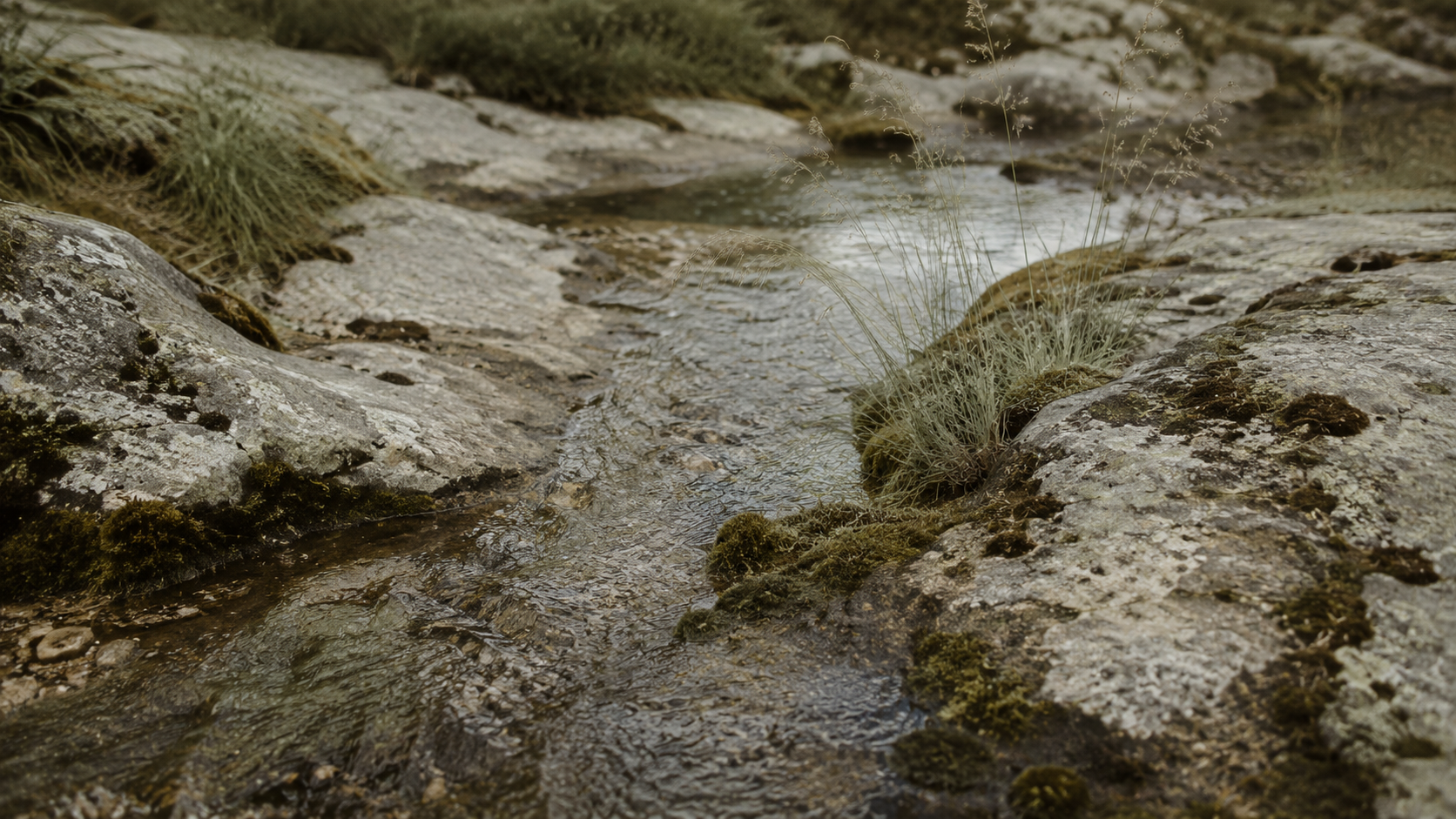
NATURE OF THE RILL
A rill is a small movement of water: narrow, quiet, and often overlooked. It is not a river, not a monument, not an object asking to be seen. It is a line of relation — between ground and weather, material and time, shelter and landscape. It forms by following the conditions already present: slope, soil, stone, root, shade. Its intelligence is not imposed from above, but discovered through contact.
For Studio Rill, the word describes a way of working. Architecture is understood less as an isolated form and more as a careful adjustment within a larger field of forces. Water, light, air, material, vegetation, and daily use are not secondary effects; they are the substance of the work. A building should gather these conditions without exhausting them. It should give shape to use while allowing the world around it to remain alive, legible, and present.
This is why our work returns to elemental materials: timber, stone, earth, metal, cork, glass, plaster, clay, planting, and water. These materials carry weight, texture, temperature, scent, and memory. They age visibly. They invite touch. They connect the interior body to the exterior world. Used with restraint, they can make buildings feel calmer, healthier, and more durable — not through spectacle, but through a more direct relationship with the natural systems that sustain life.
MATERIAL AS ATMOSPHERE
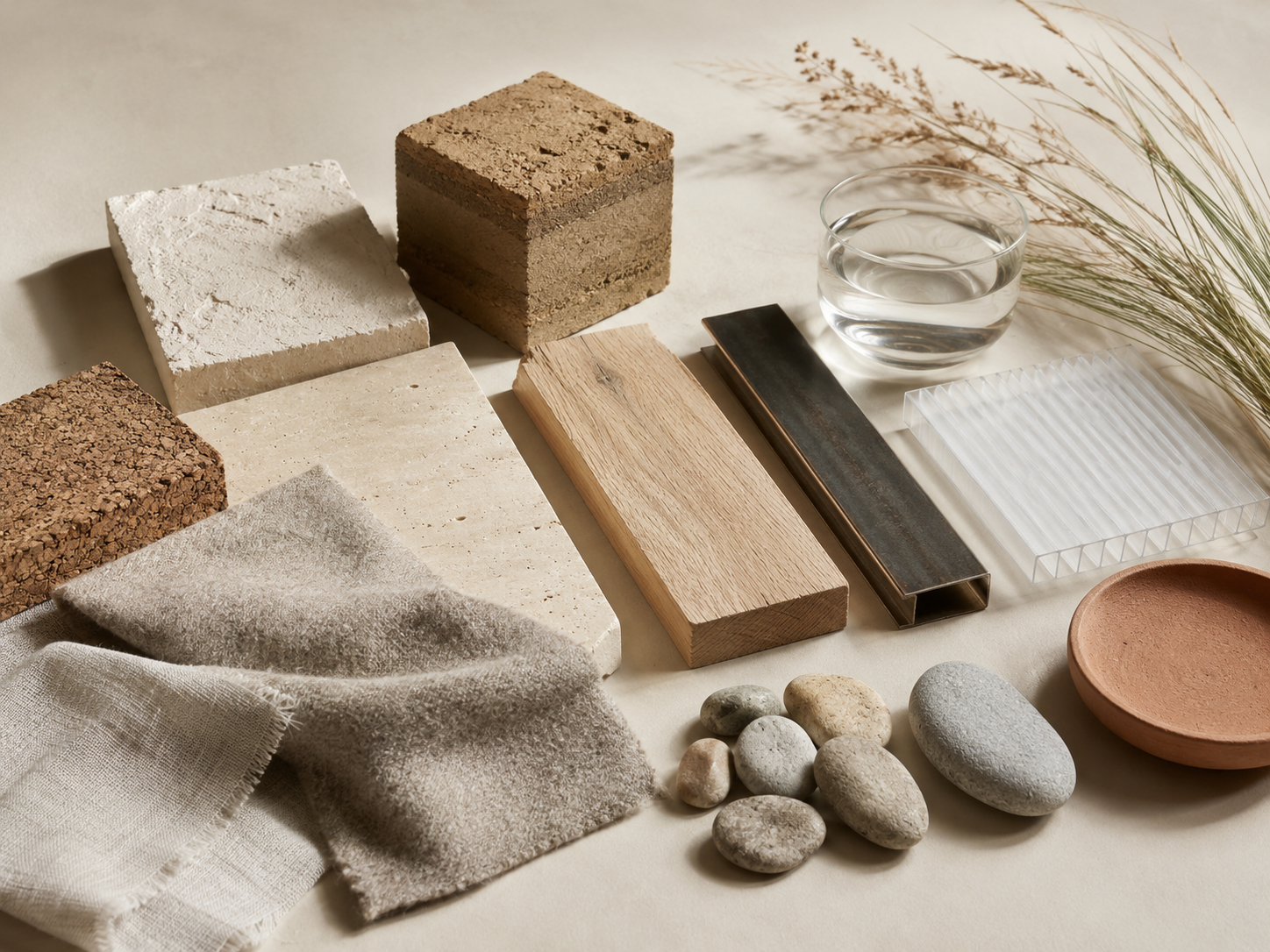
Materials We Return To
Our palette begins with materials that are tactile, repairable, and materially honest: pale stone, lime plaster, cork, timber, rammed earth, clay, mineral finishes, galvanized metal, translucent polycarbonate, water, gravel, native planting, and natural textiles. These are not selected only for appearance. They are chosen for how they temper light, absorb sound, regulate humidity, hold warmth, weather over time, and support a closer relationship between the body and the environment.
Timber for warmth, structure, cabinetry, ceilings, and touch.
Stone for mass, threshold, permanence, and thermal presence.
Rammed earth and clay for mineral depth, humidity moderation, and connection to ground.
Cork for softness, acoustics, tactility, and renewable interior surfaces.
Lime plaster and mineral finishes for quiet walls, breathable surfaces, and subtle light.
Galvanized metal and bronze for precise edges, weathering, and infrastructural clarity.
Translucent polycarbonate and glass for diffused light, privacy, and layered enclosure.
Natural textiles for softness, acoustic comfort, and bodily scale.
Gravel, planting, and water for drainage, cooling, biodiversity, and landscape continuity.
A Healthier Material Imagination
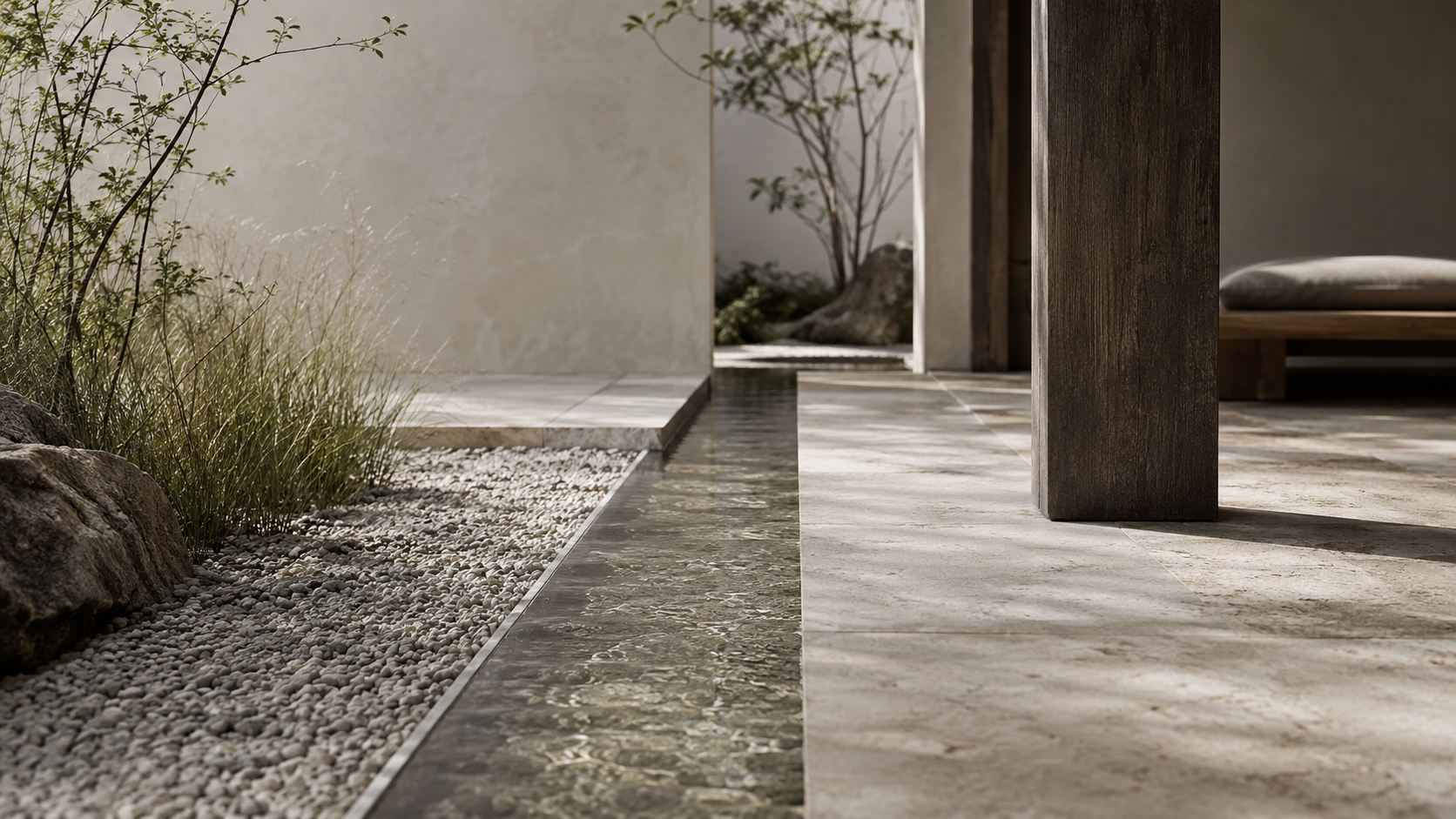
Sustainability is often described through performance metrics, and those metrics matter. But buildings are also experienced through the nervous system: through light levels, air movement, sound, texture, temperature, smell, and the rhythm of daily occupation. Natural and minimally processed materials can support this experience by reducing visual harshness, softening acoustics, moderating surfaces, and creating rooms that feel grounded rather than sealed off from the world.
Timber, cork, clay, stone, lime, wool, linen, planting, and water each bring a different kind of environmental intelligence. Some store carbon. Some are low in embodied energy. Some are durable, local, reusable, or repairable. Others simply make interiors feel more breathable and less synthetic. The aim is not purity, but balance: combining ordinary construction with careful detailing so that the building feels durable, calm, and materially alive.