HOUSE 050
DALLAS, TX
2026
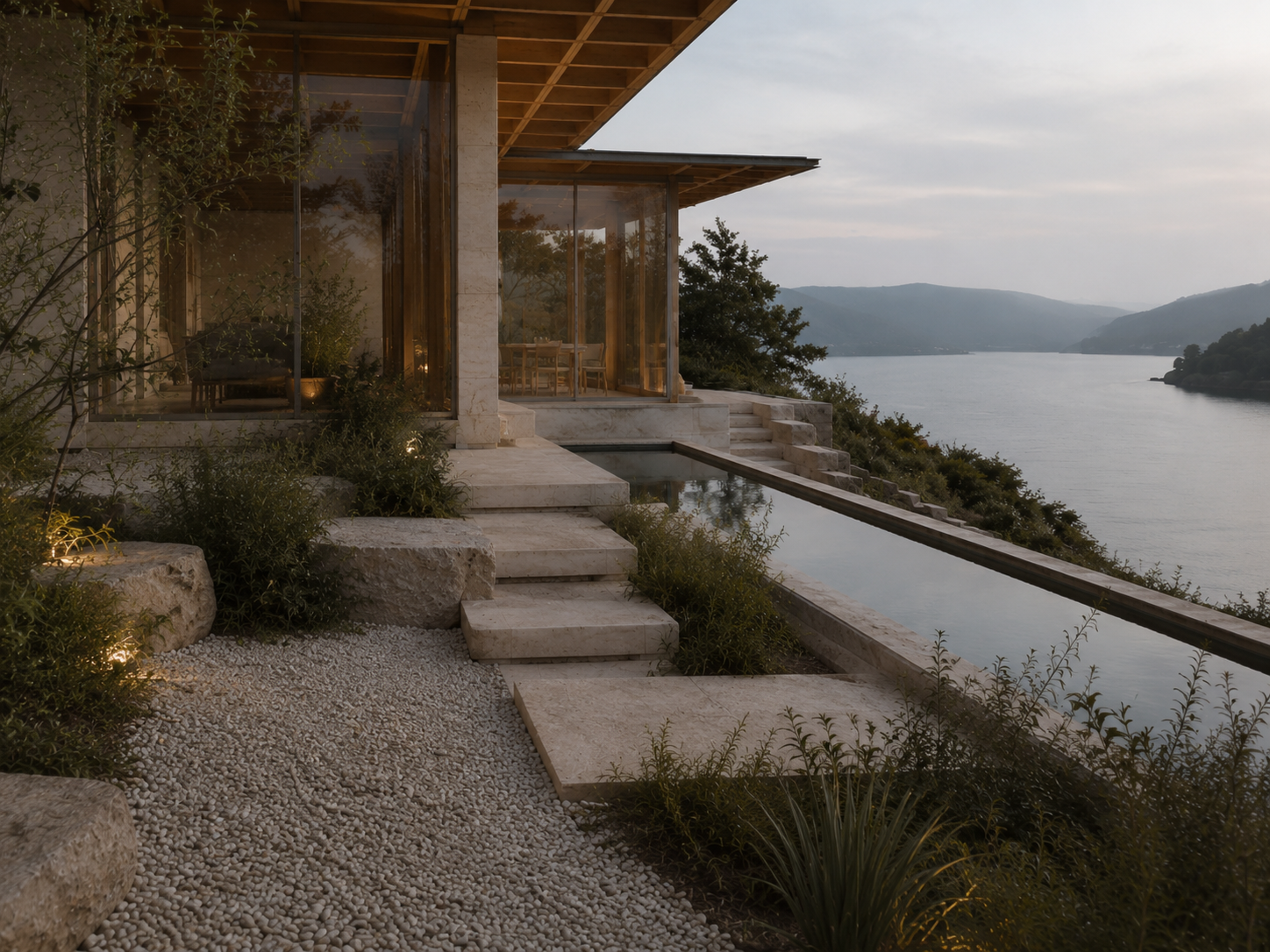
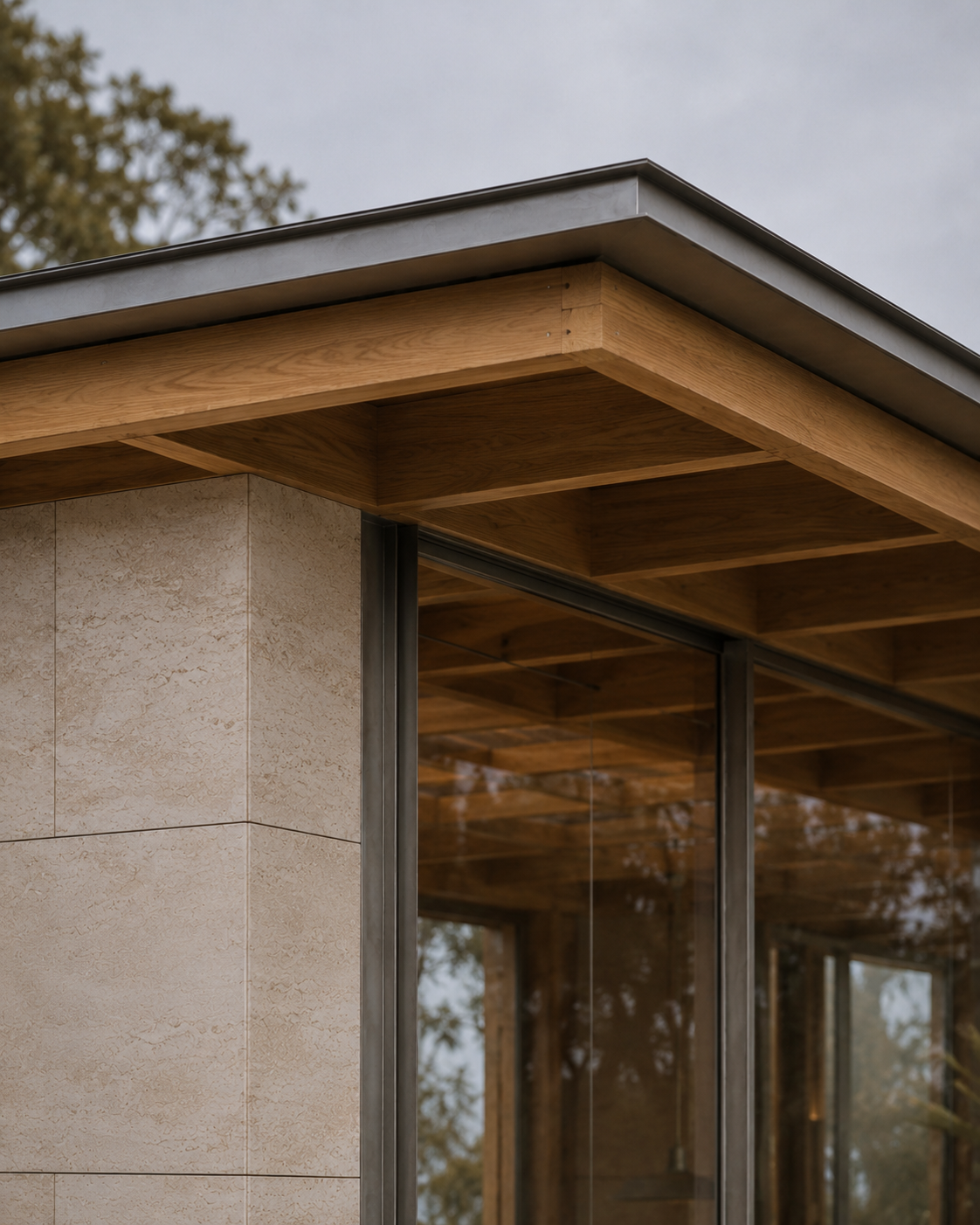
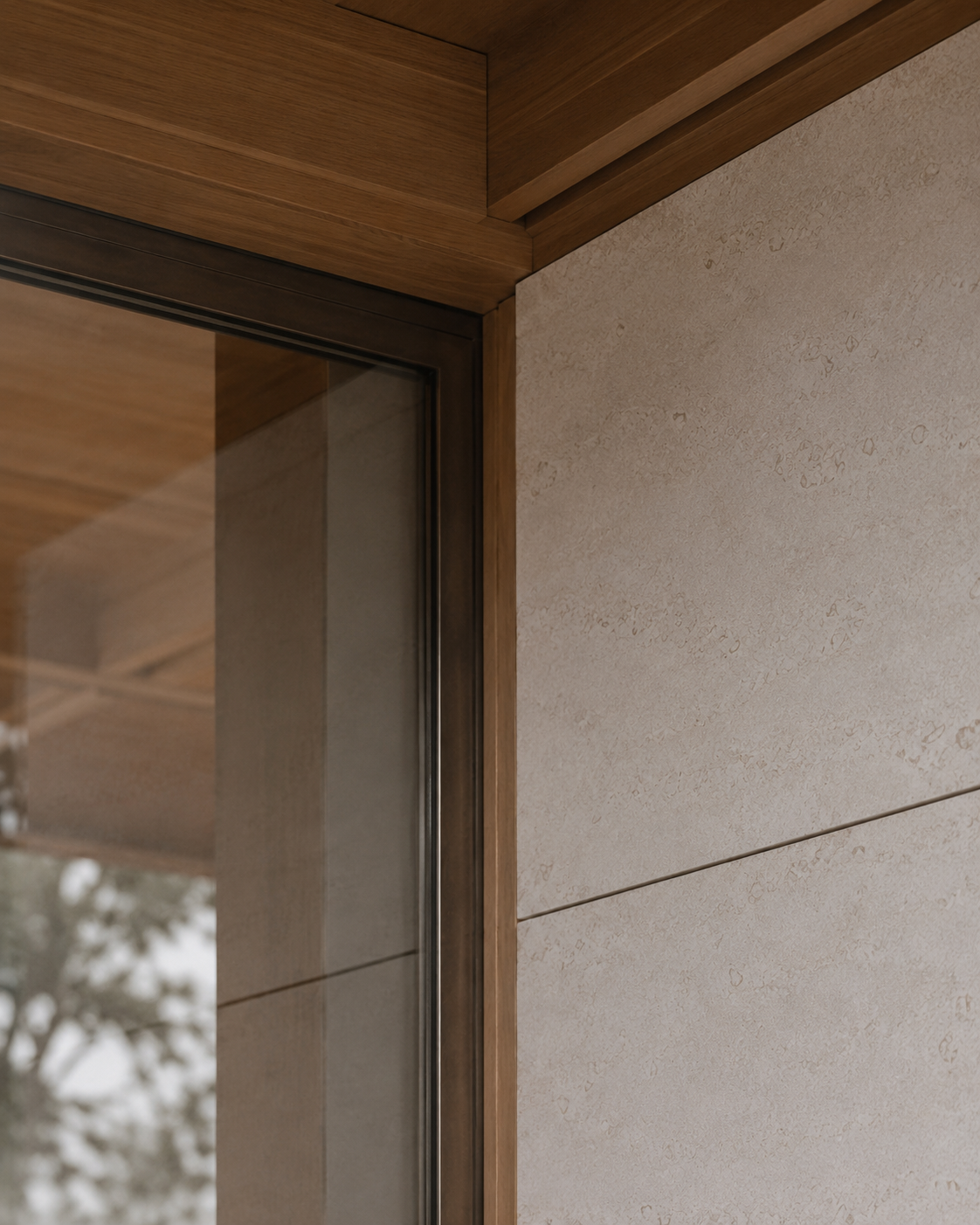
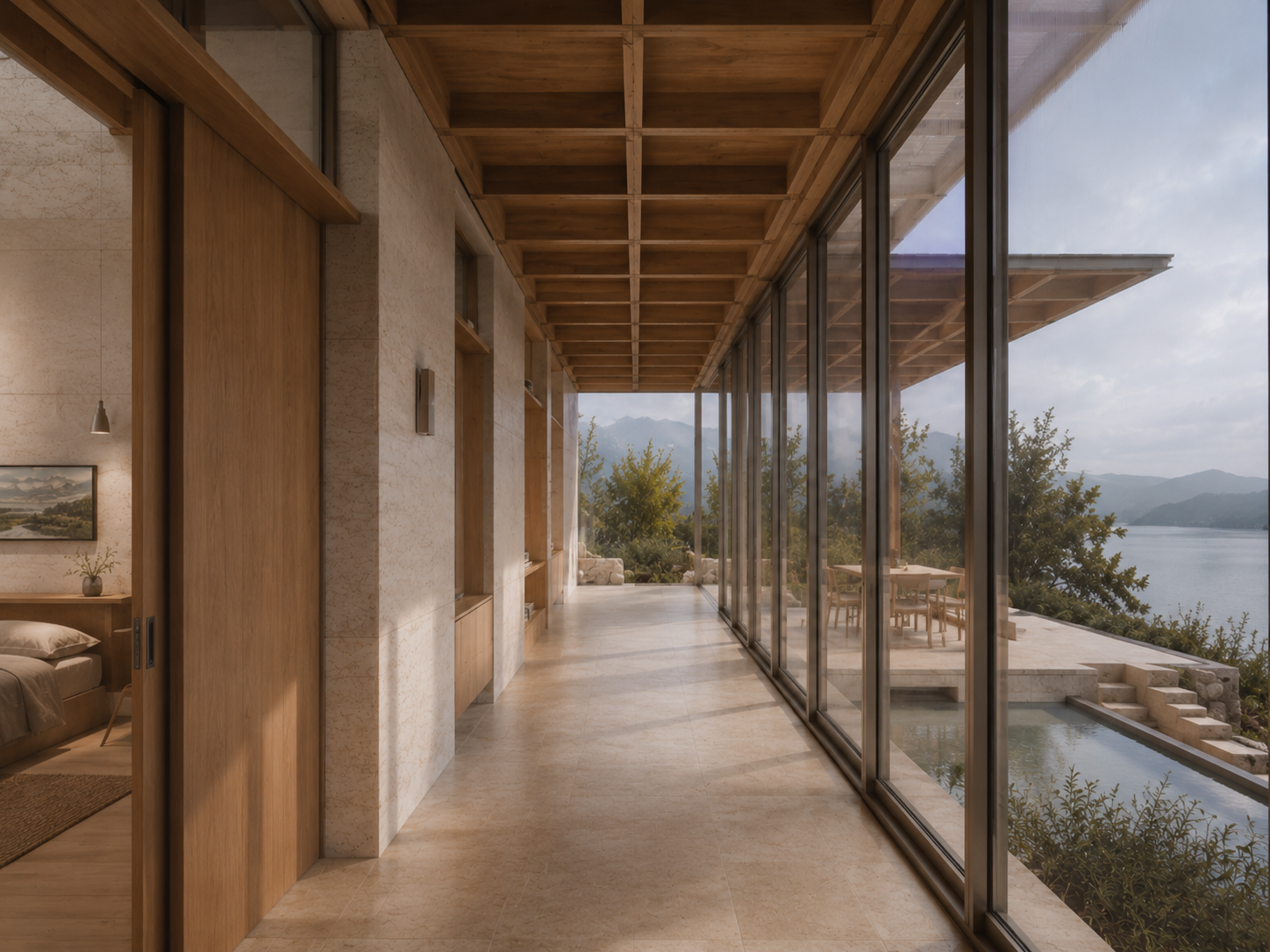
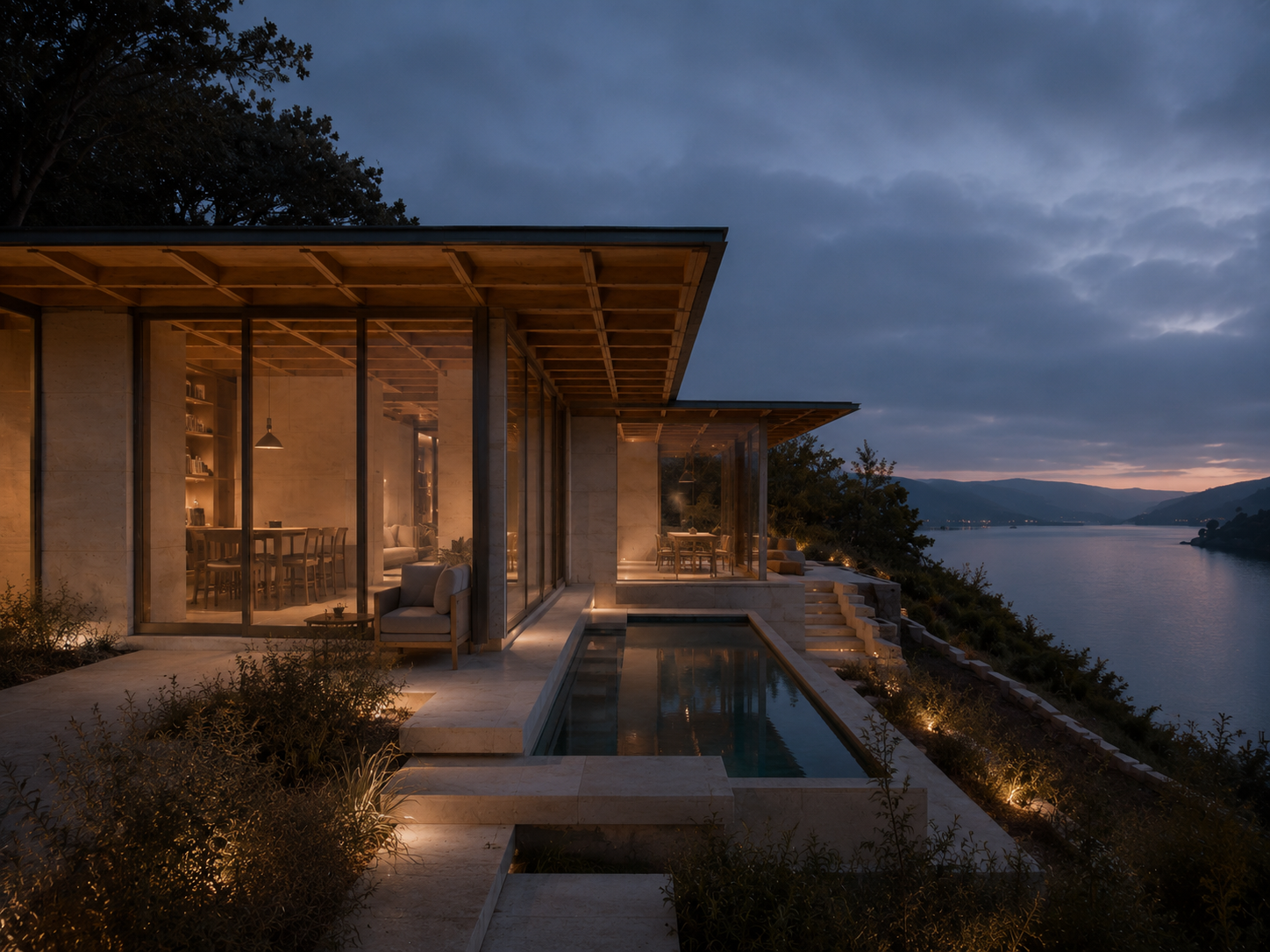
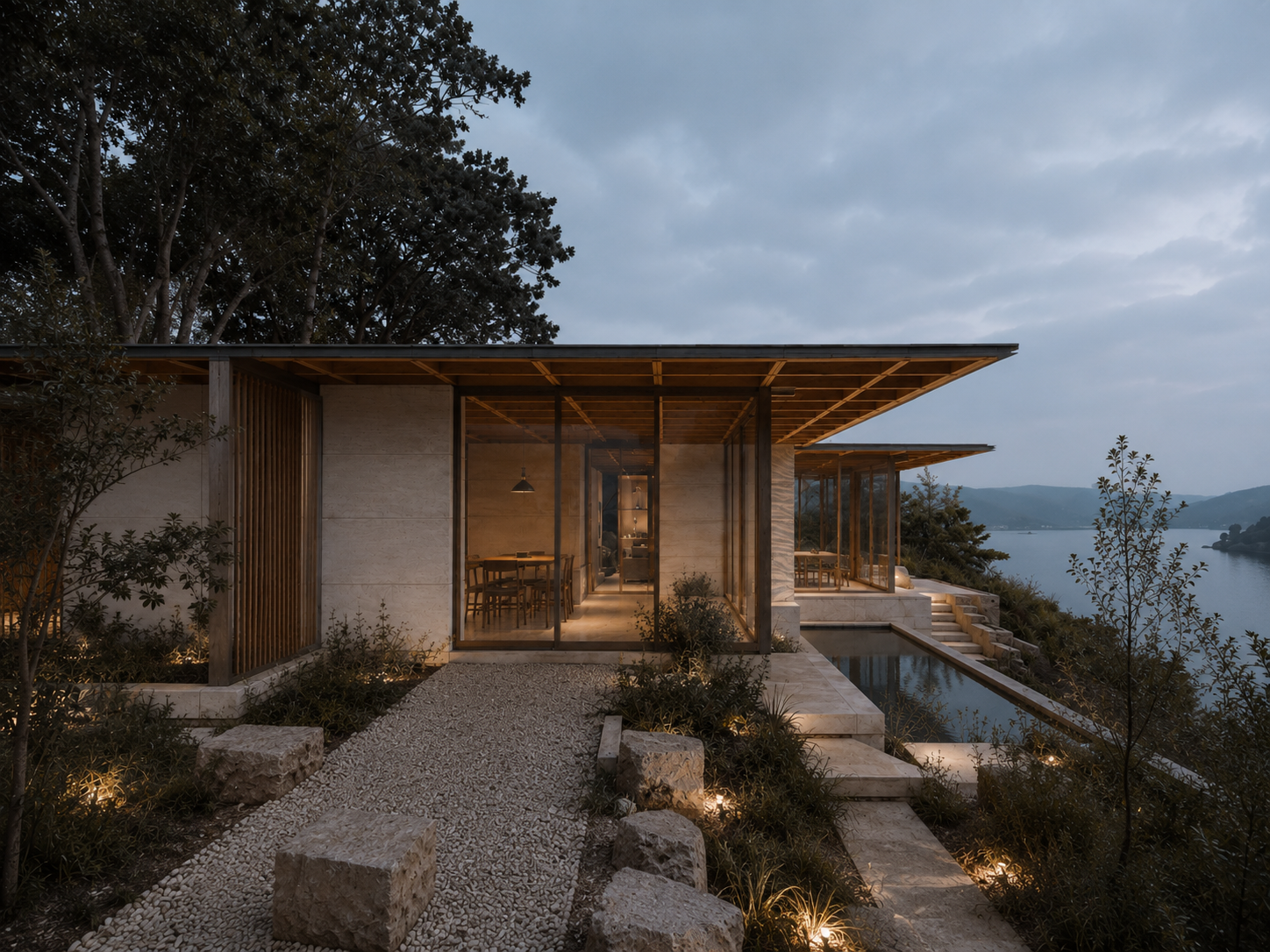
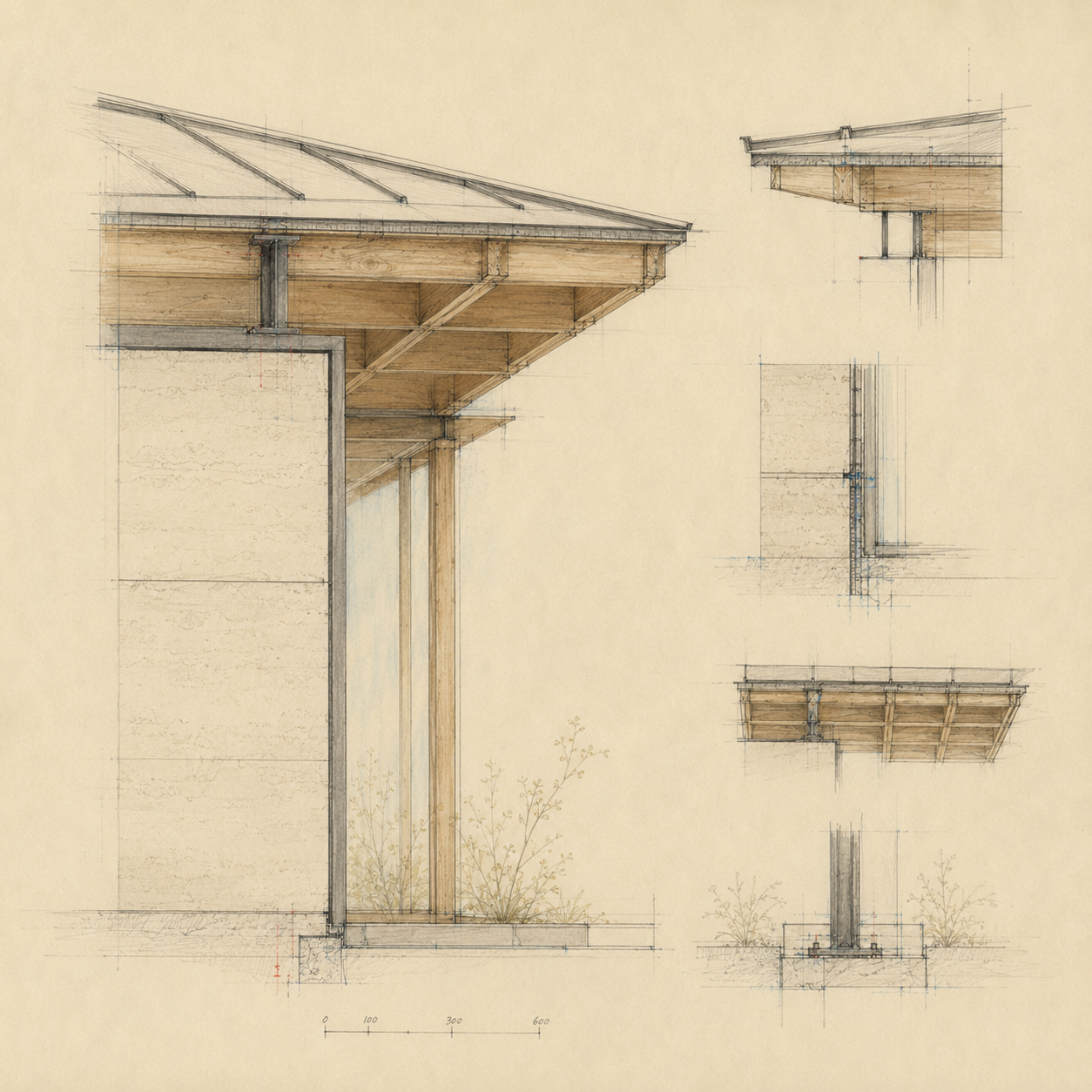
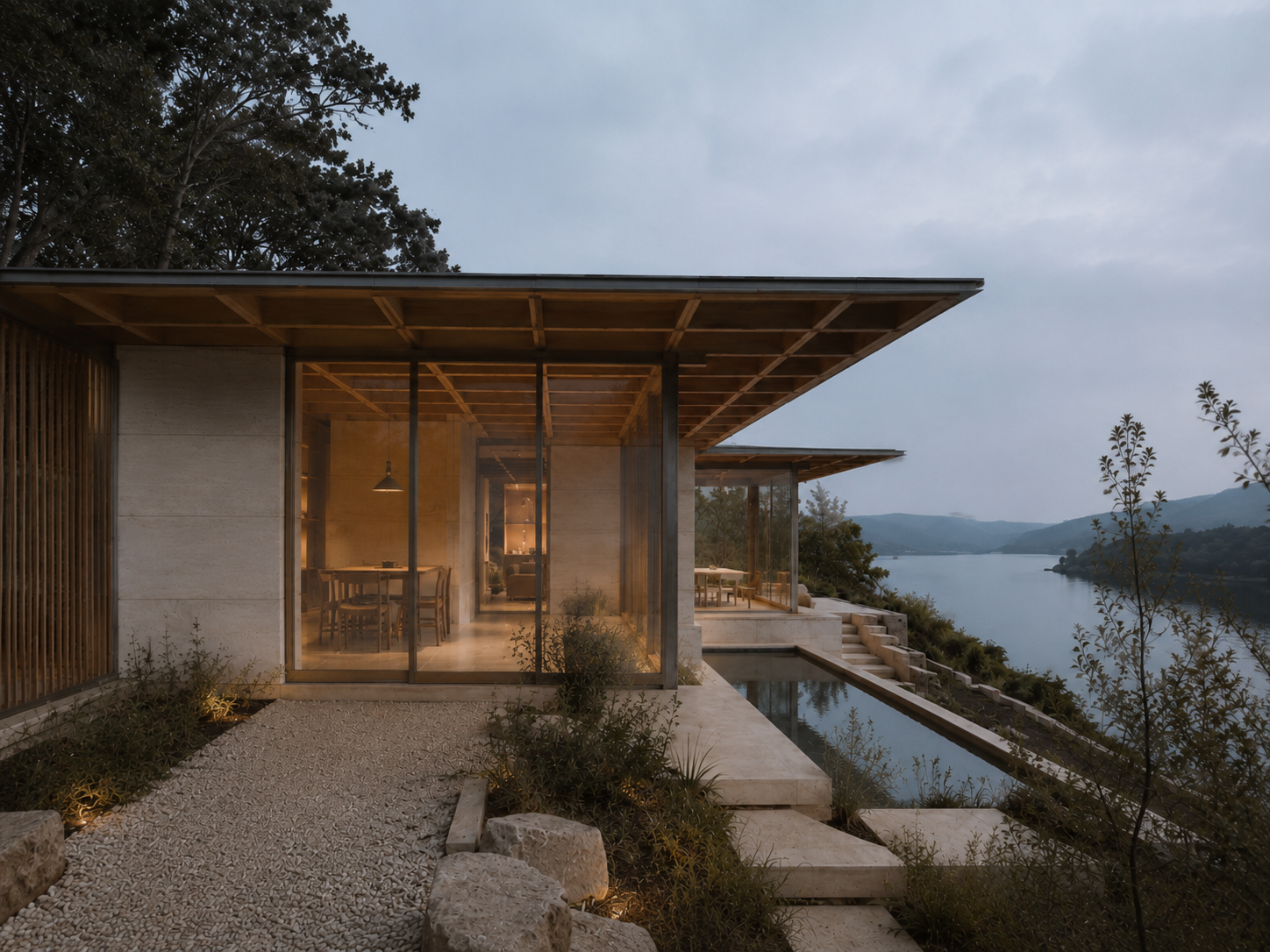
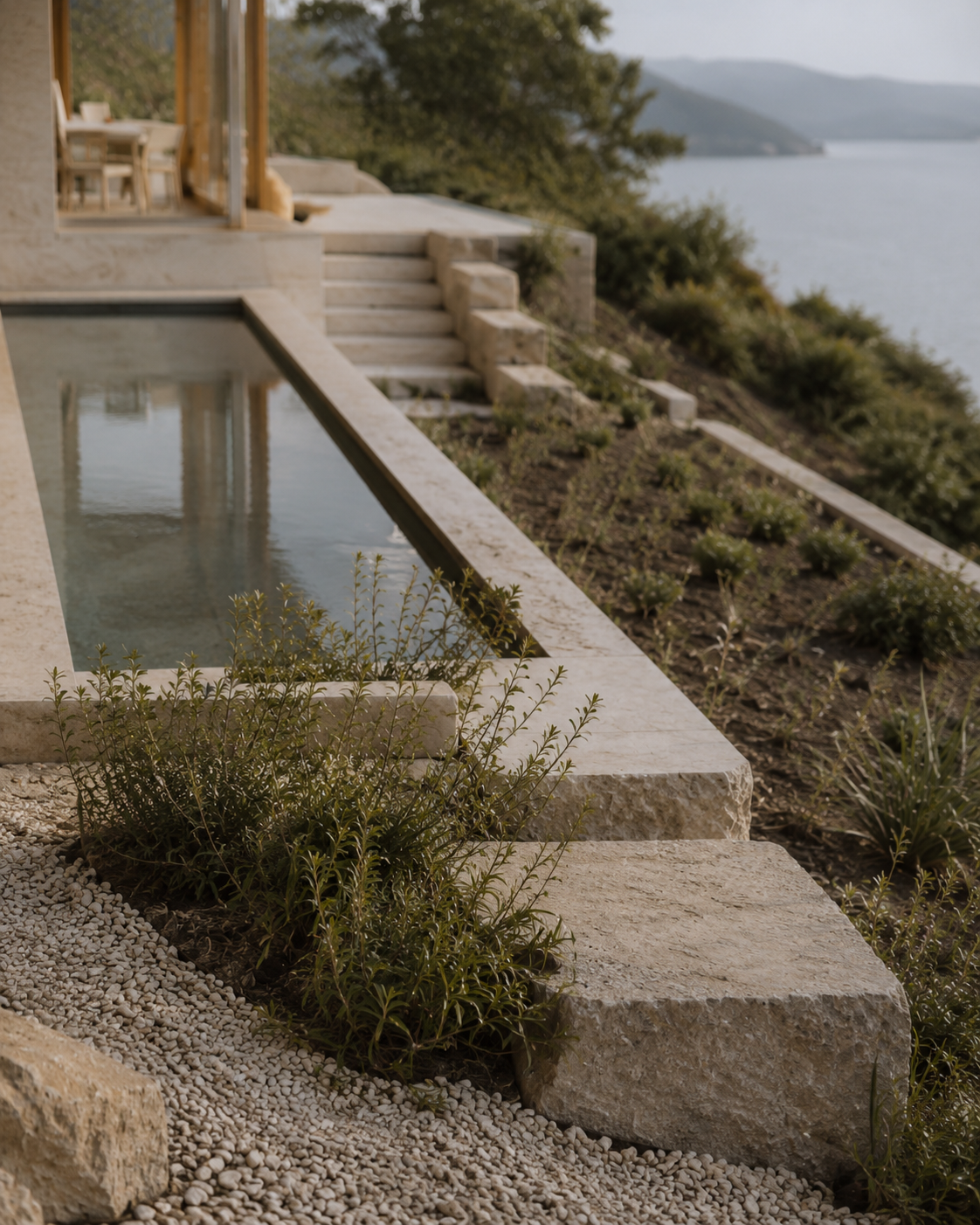
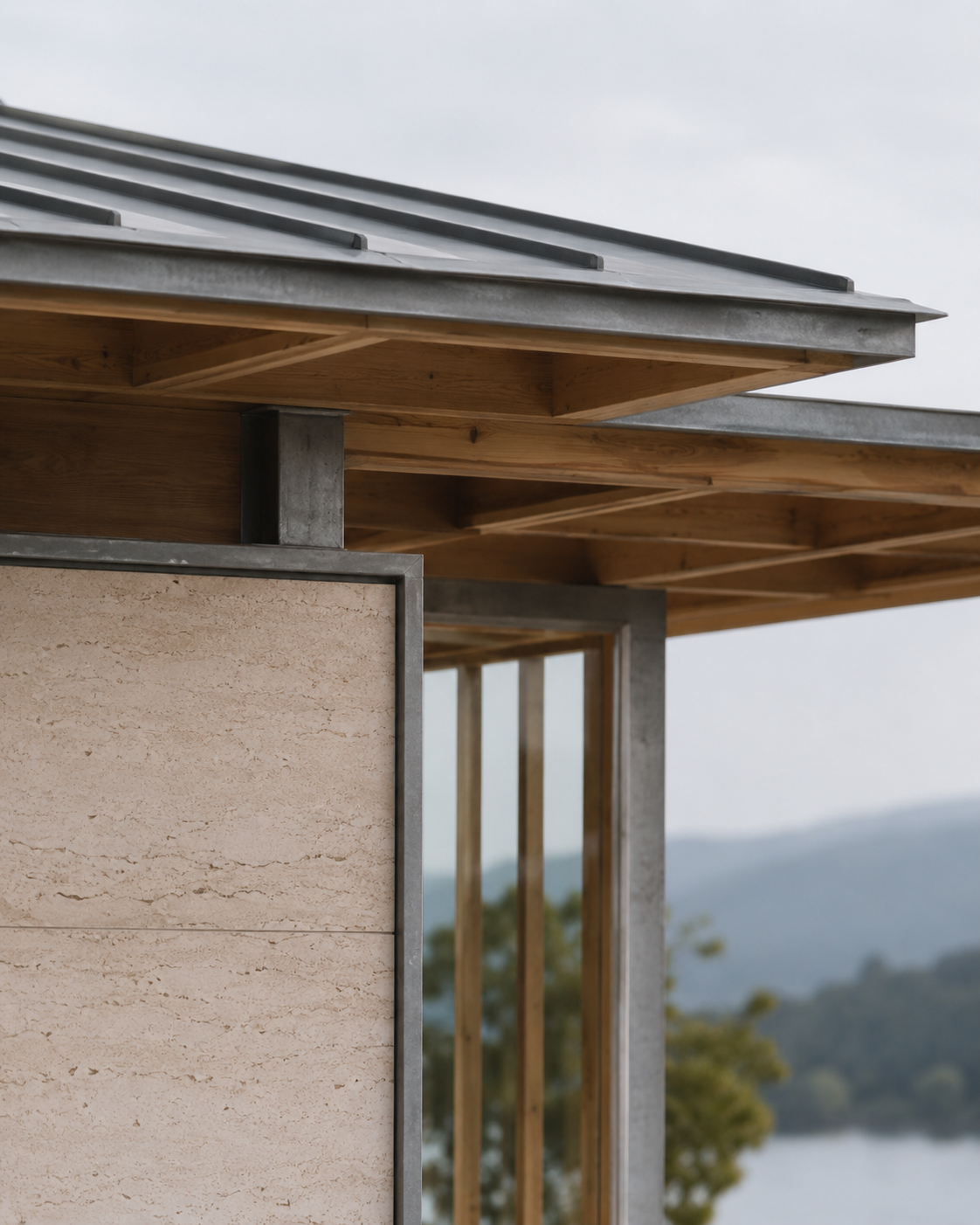
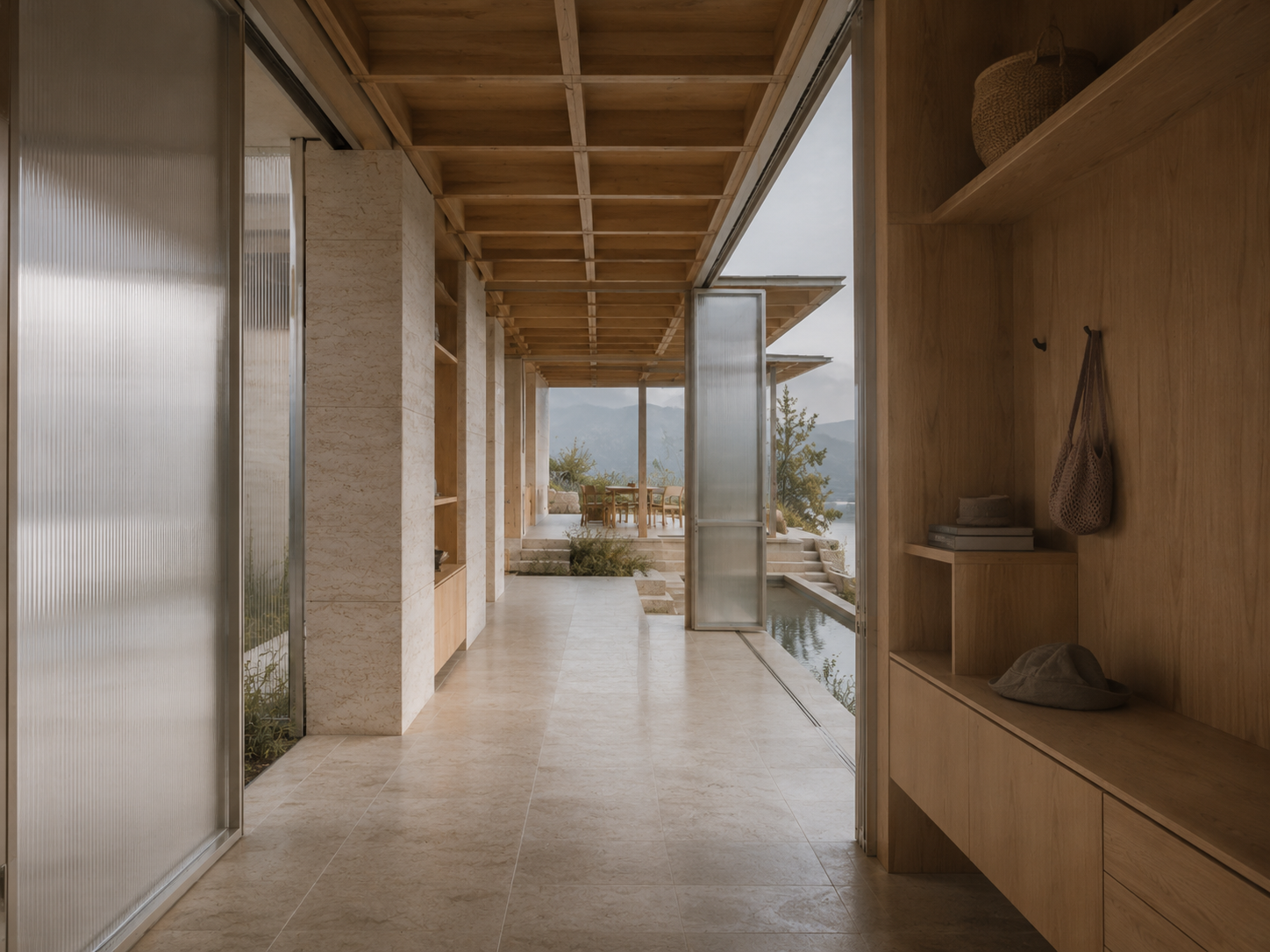
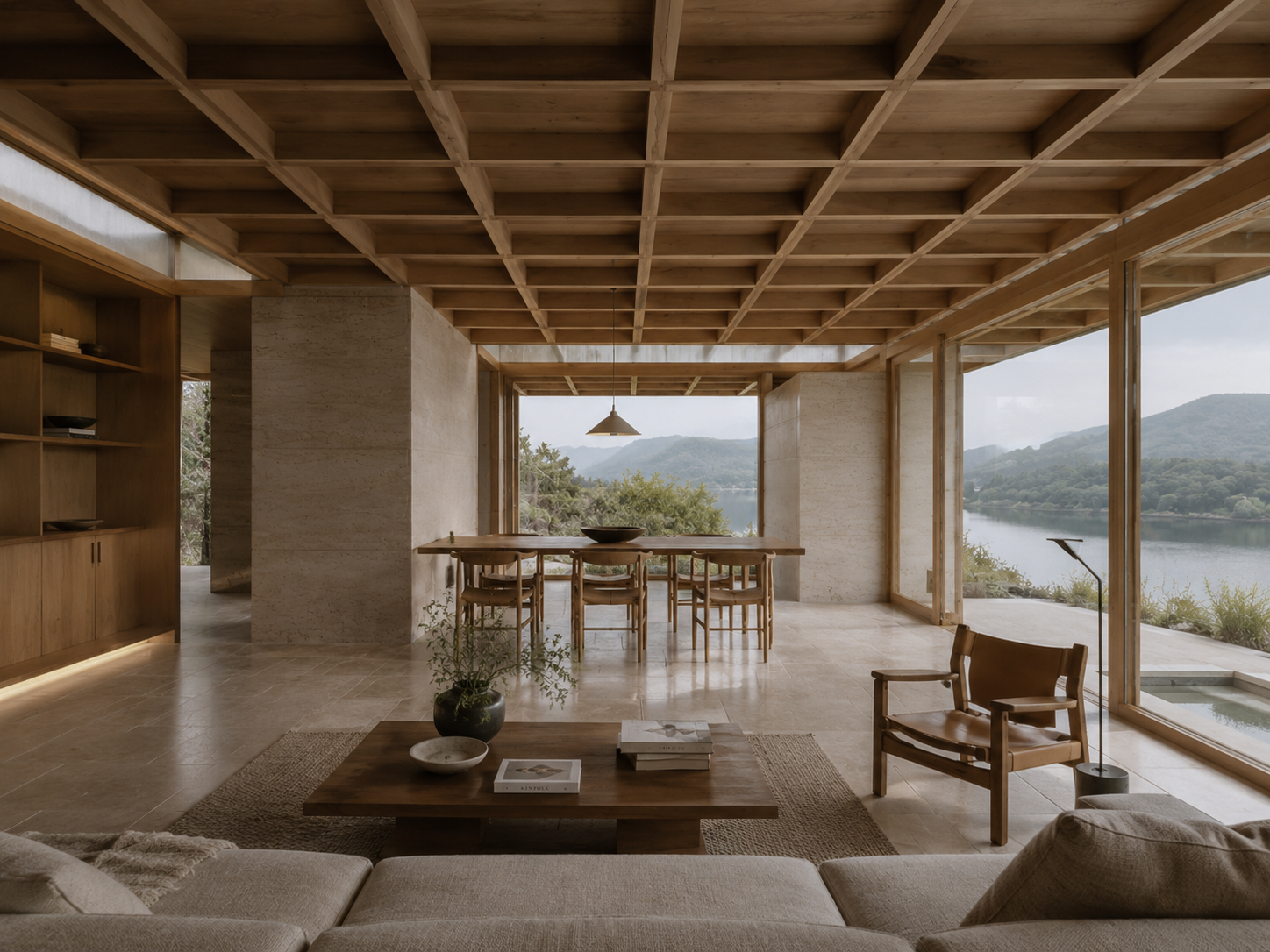
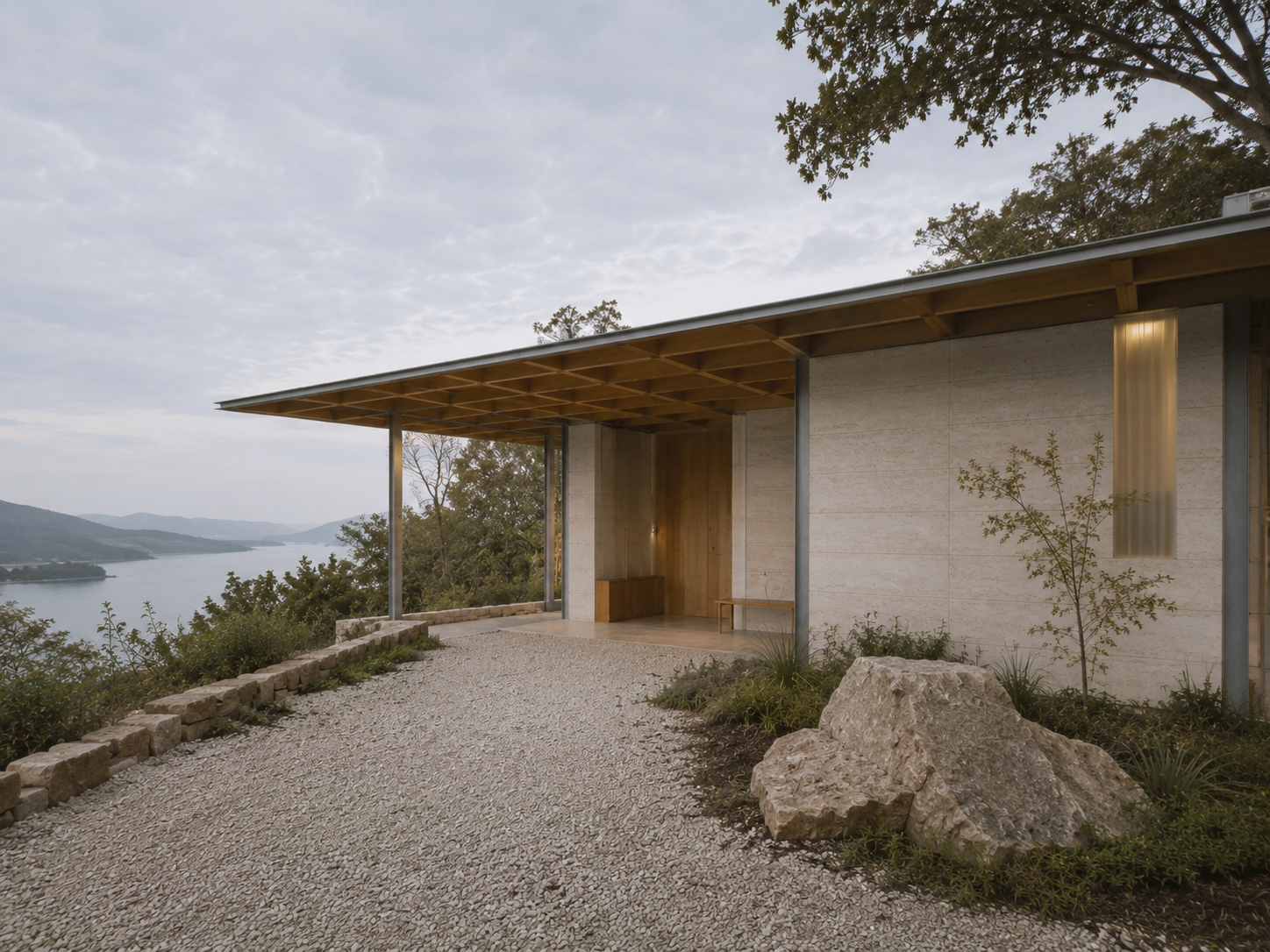
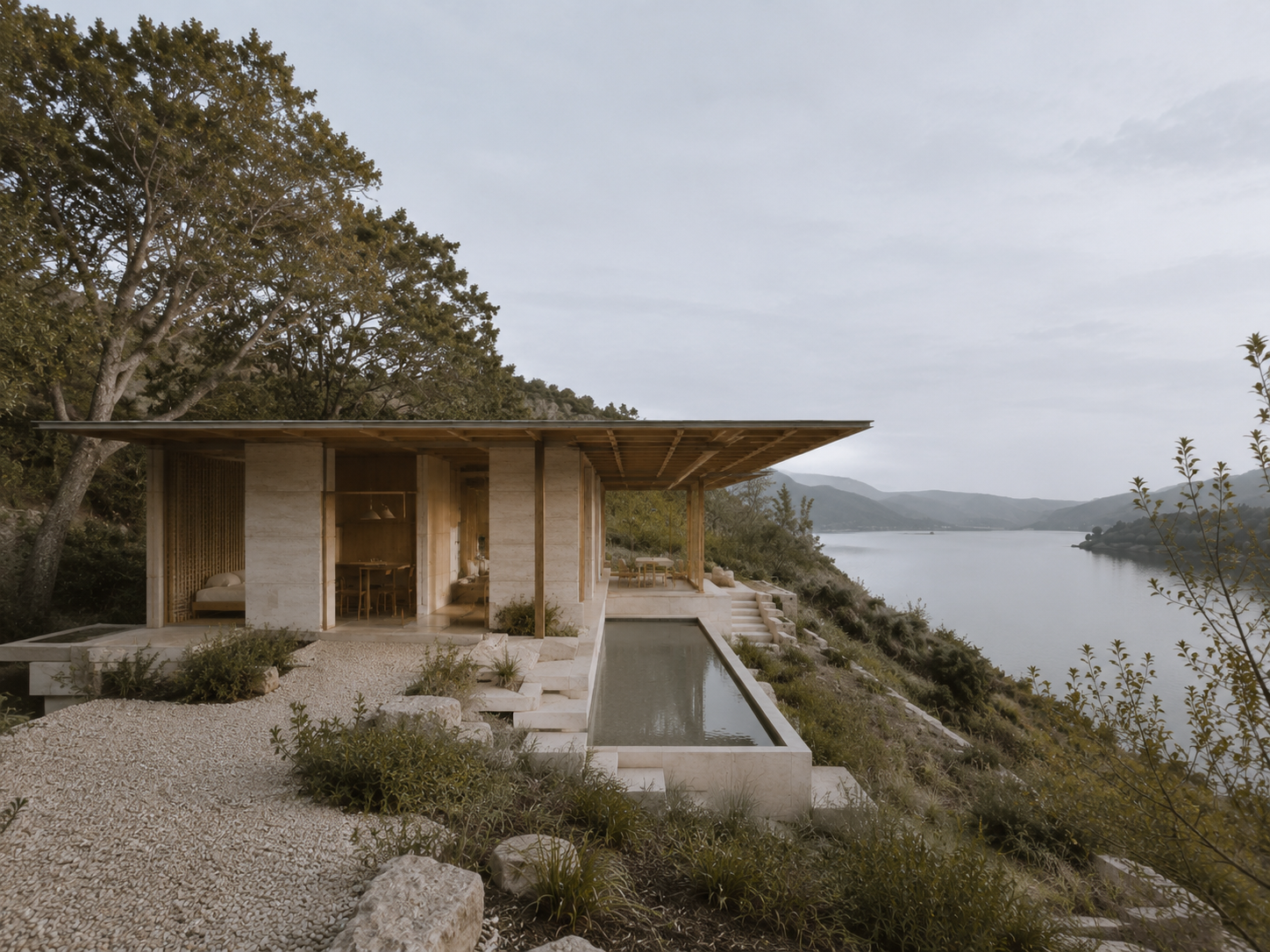
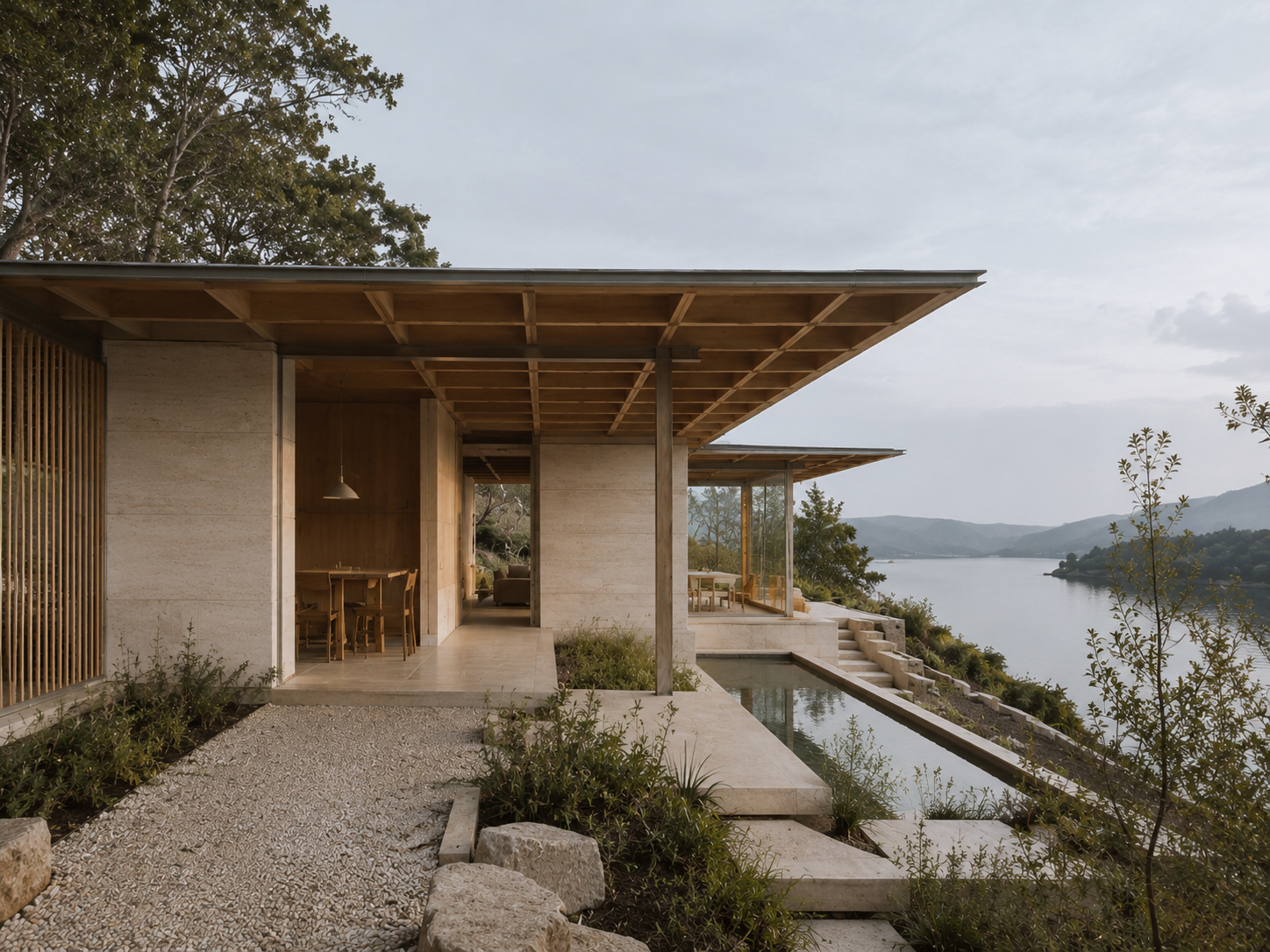
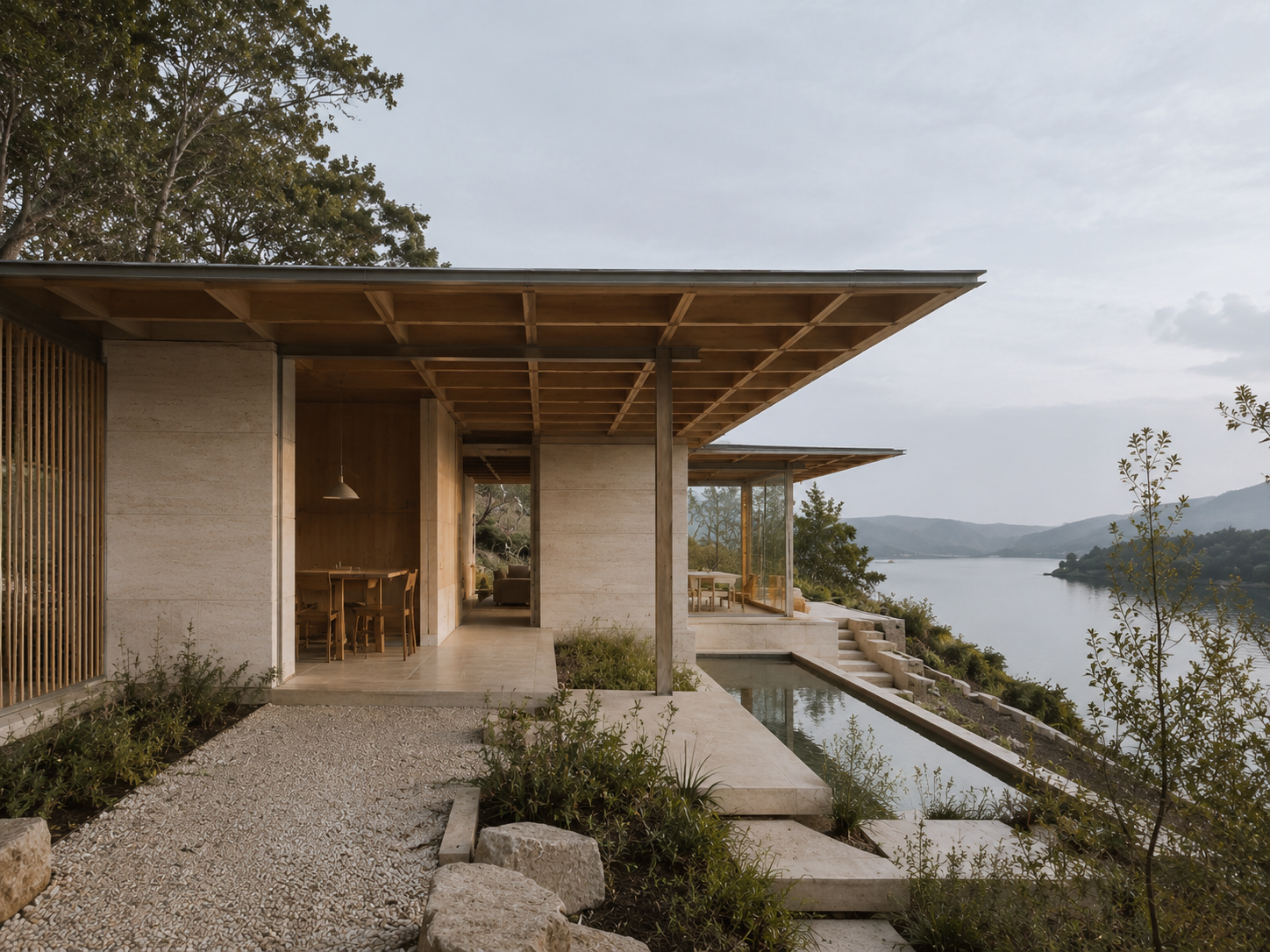
The house is conceived as a low pavilion set into a hillside landscape, organized beneath a single thin roof plane that gathers the project into one continuous datum. Rather than reading as a collection of separate objects, the house is held together by this quiet horizontal line: a shallow metal roof with a slight overhang, floating over a warm timber waffle soffit and a series of crafted interior volumes. The architecture sits between two registers — the directness of an agrarian shed and the precision of a finely made house. From a distance, it feels modest and infrastructural; up close, the enclosure, stonework, timber, and glass reveal a slower level of craft.
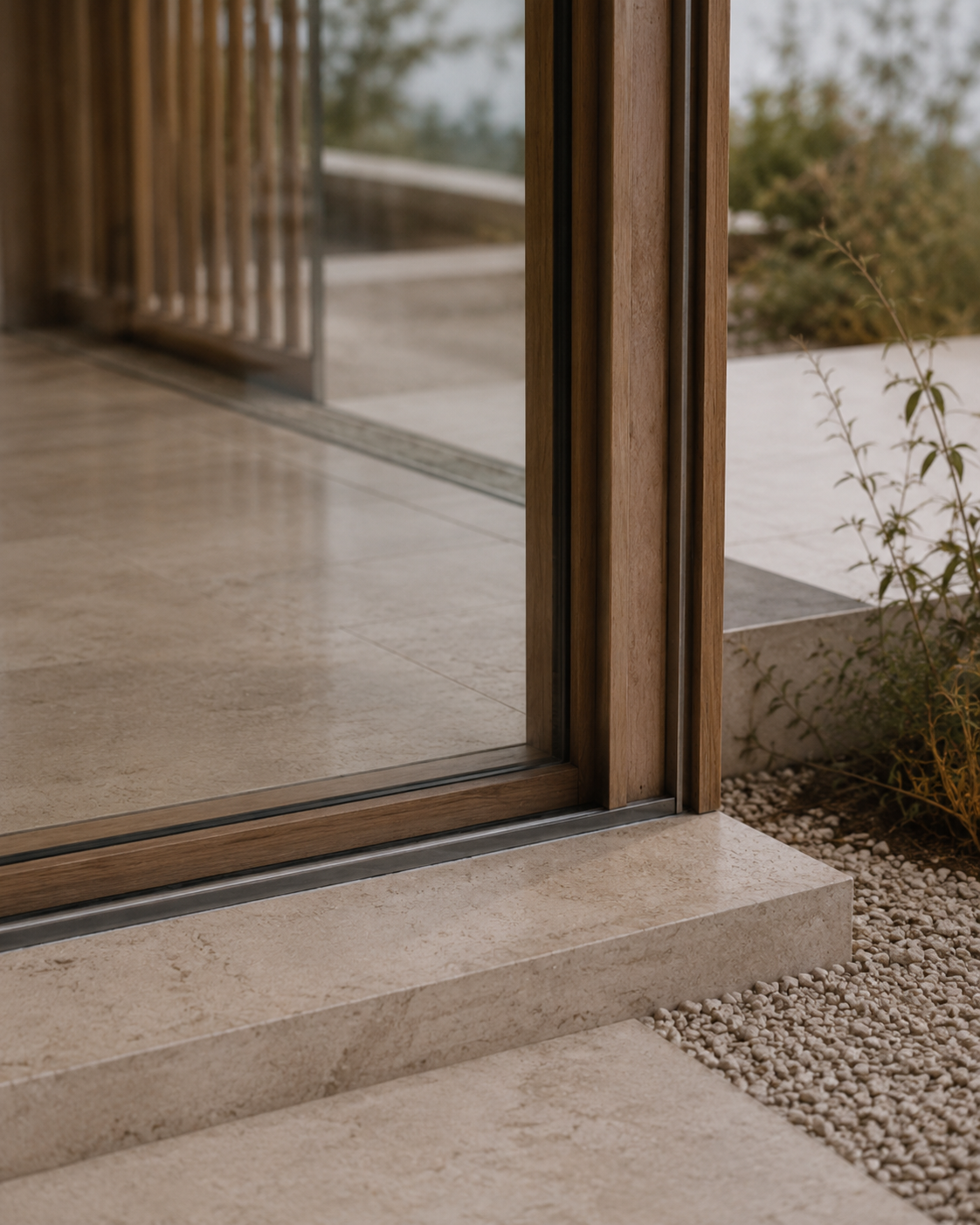
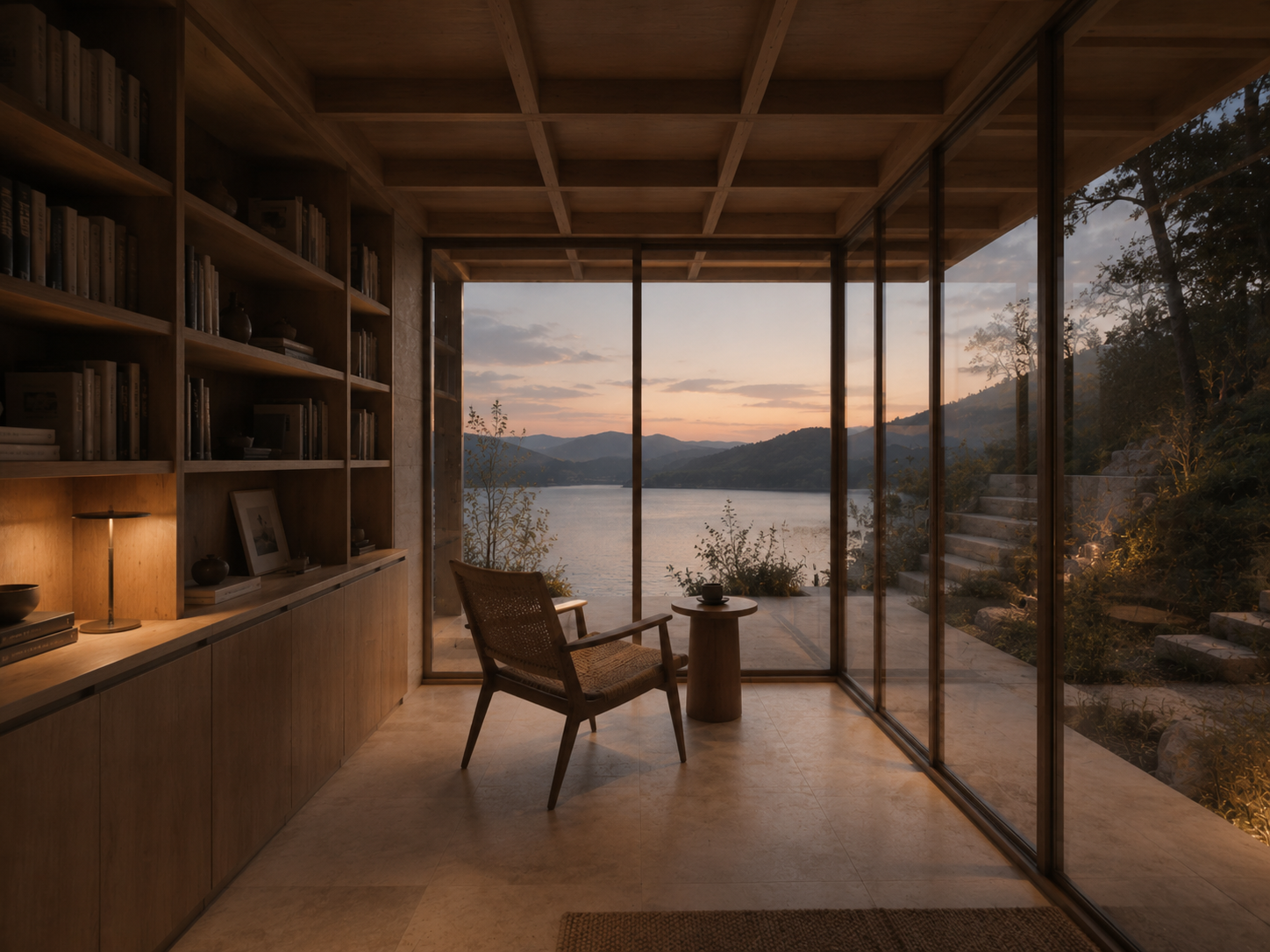
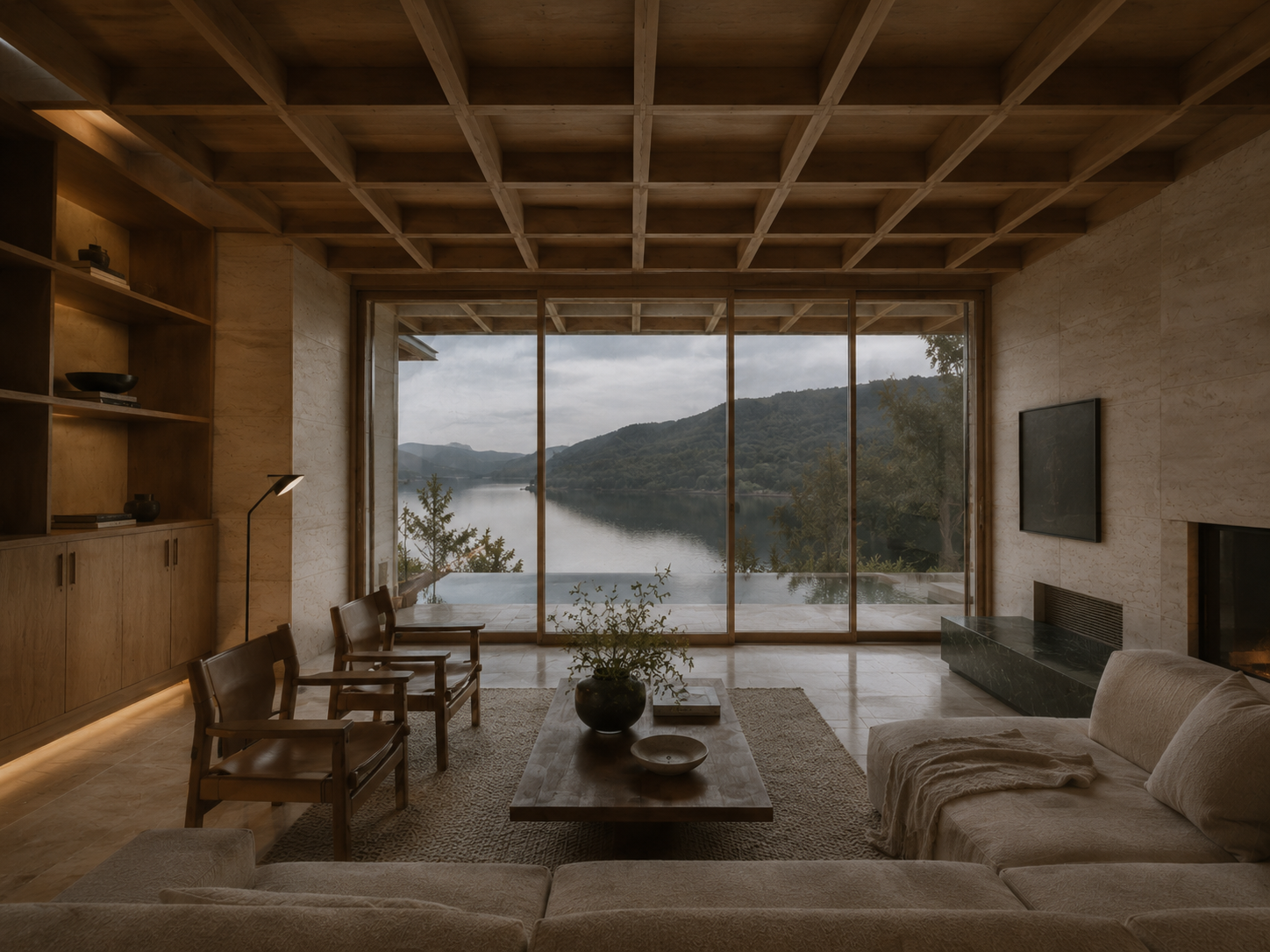
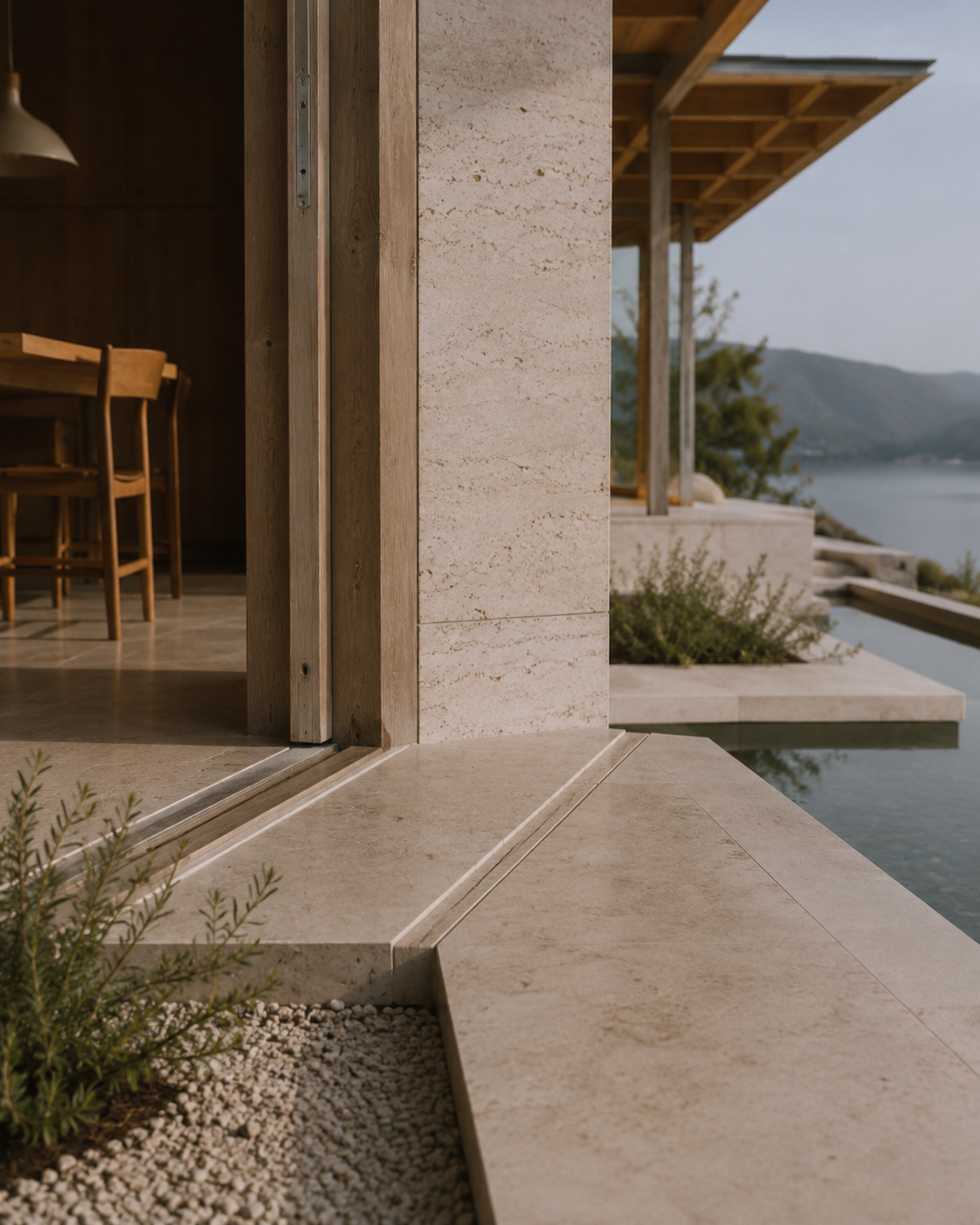
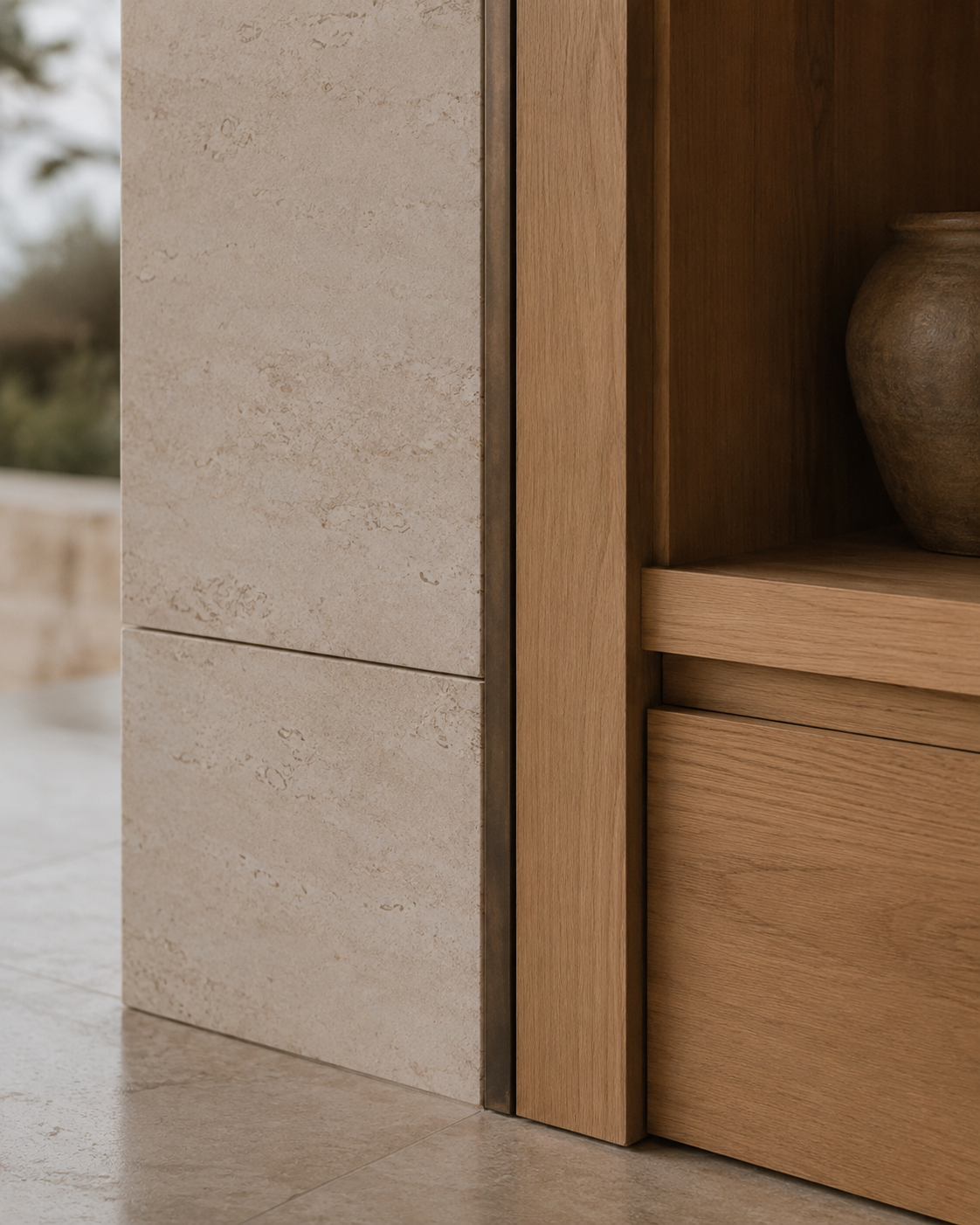
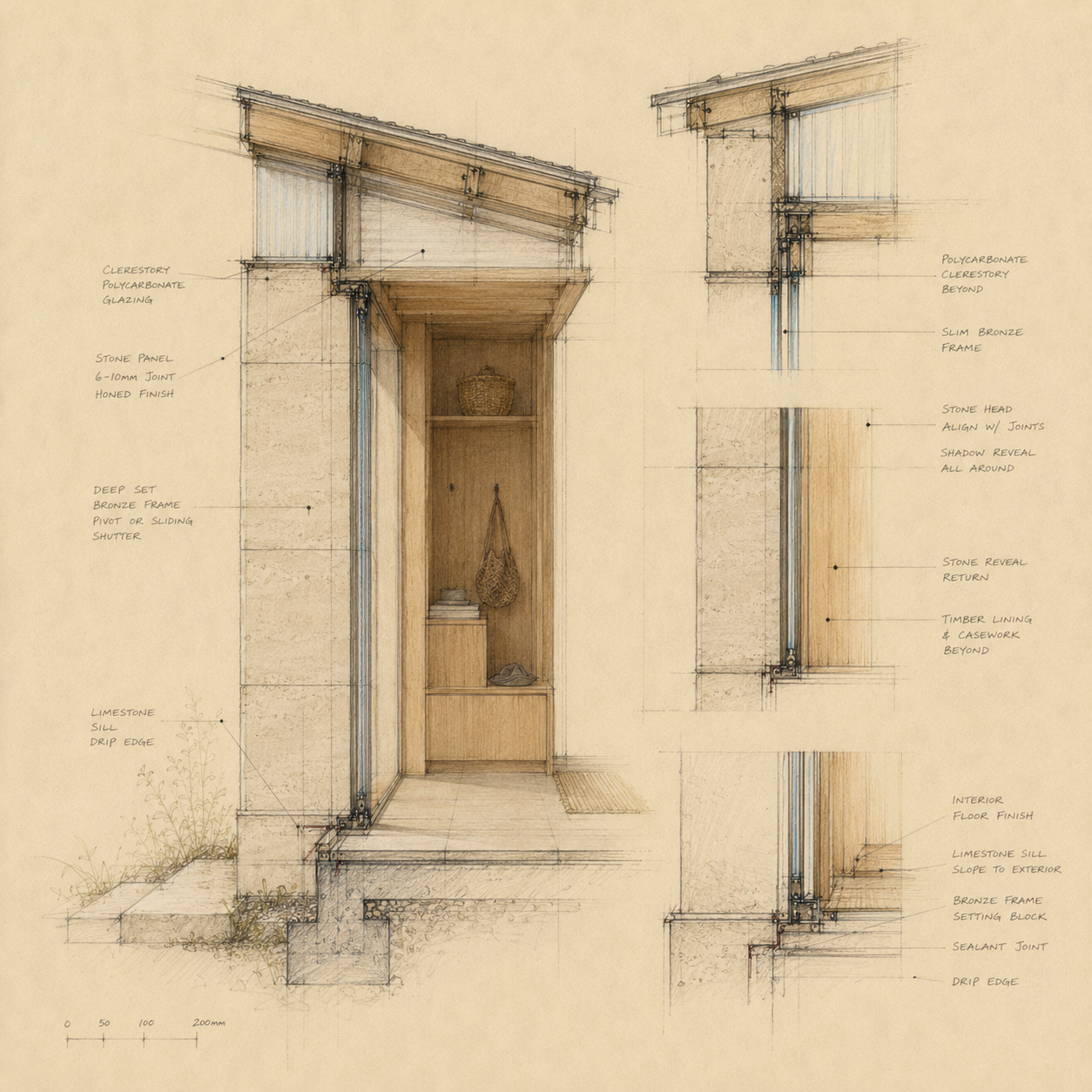
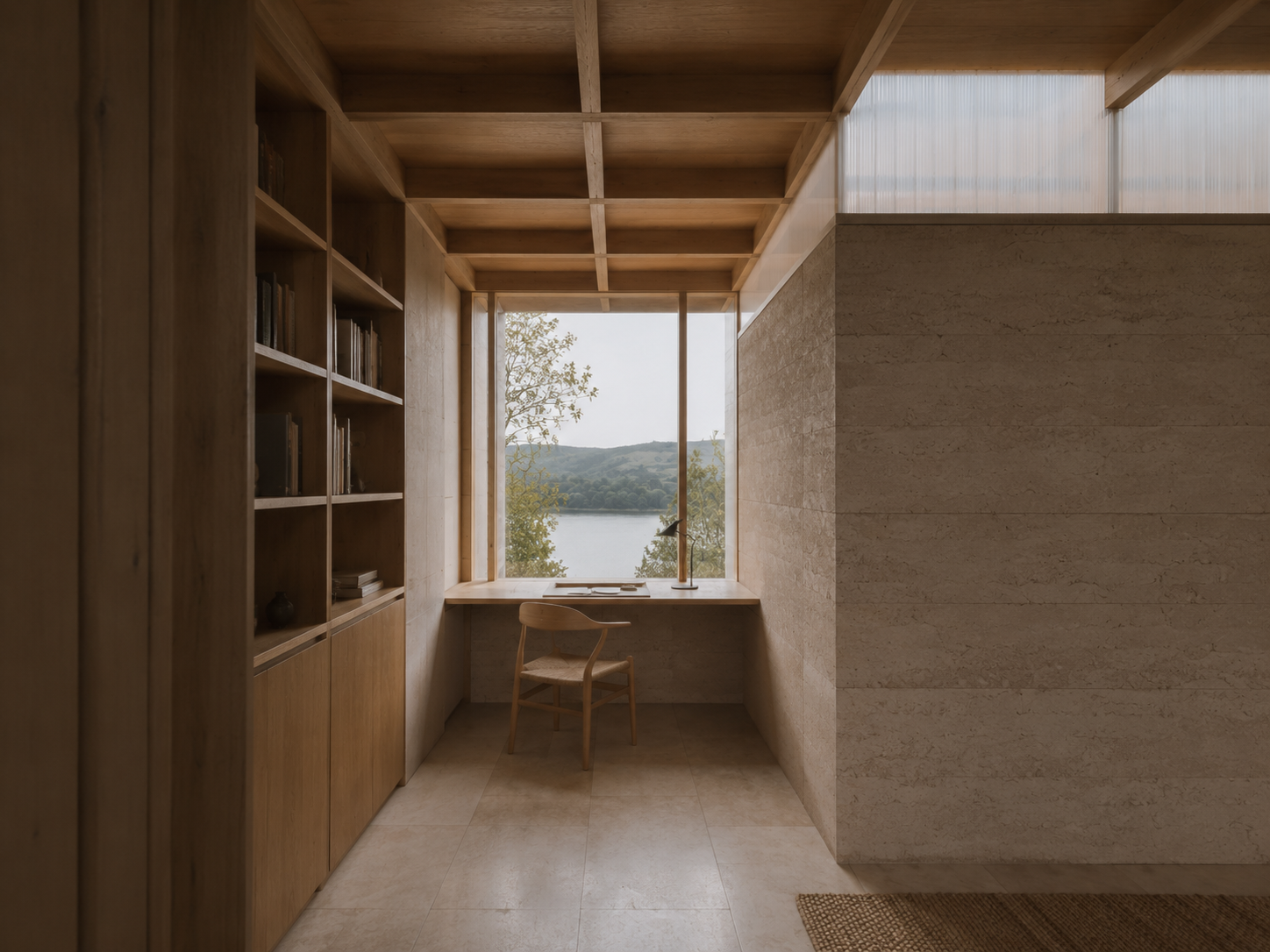
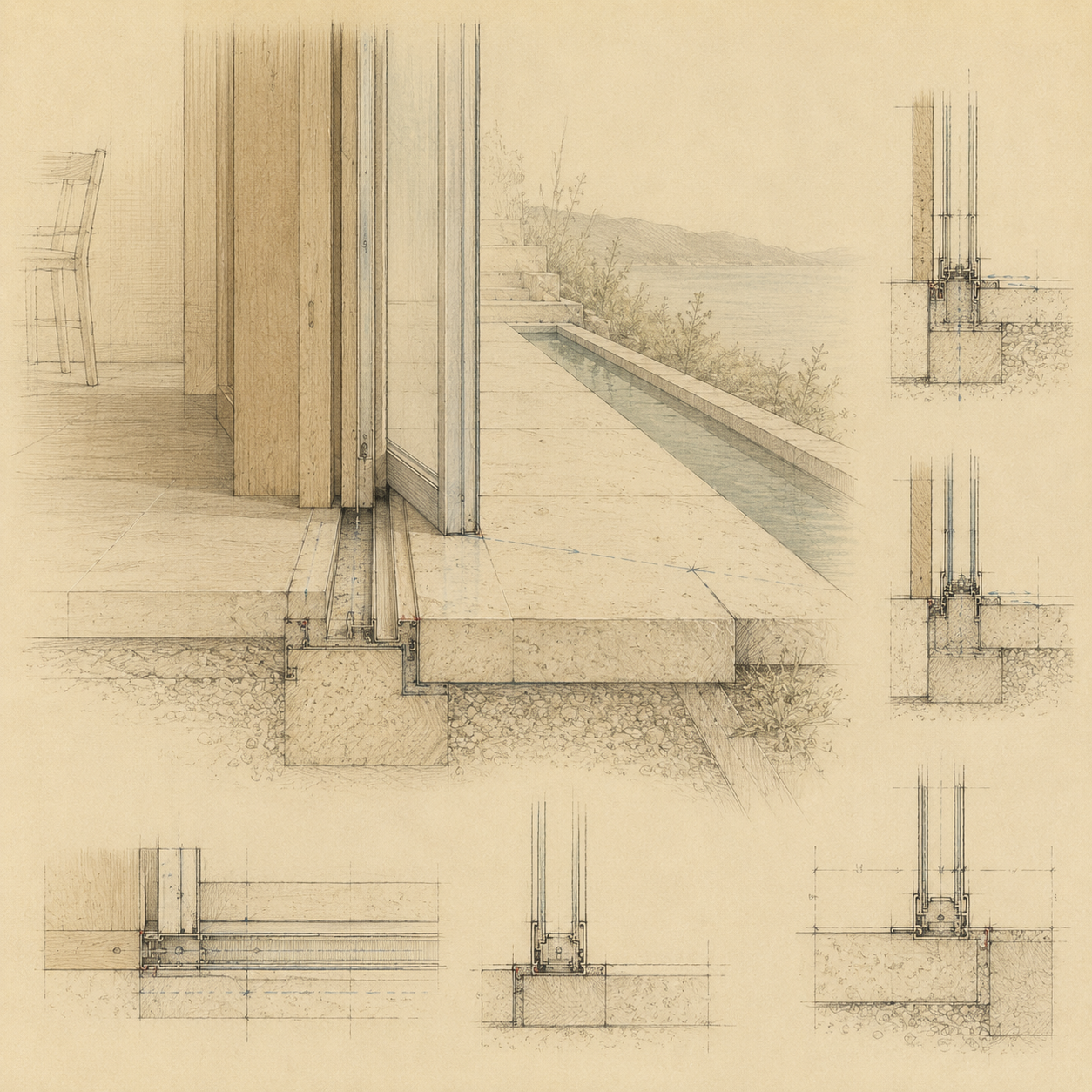
The approach begins through gravel, low native planting, and restrained landscape edges, arriving at a covered threshold where the roof first becomes legible. The entry is not monumental, but compressed and shaded, with bronze or dark metal framing, sliding glass panels, and glimpses through the house toward water and hillside beyond. Inside, the plan opens into a sequence of rooms held beneath the exposed timber ceiling: built-in wood casework, large-format limestone or travertine-like stone walls, pale mineral floors, and precisely detailed glass enclosure systems that can open the house to the patio. The rooms feel protected but never sealed off; each space is calibrated around filtered light, long views, and the changing relationship between enclosure and landscape.
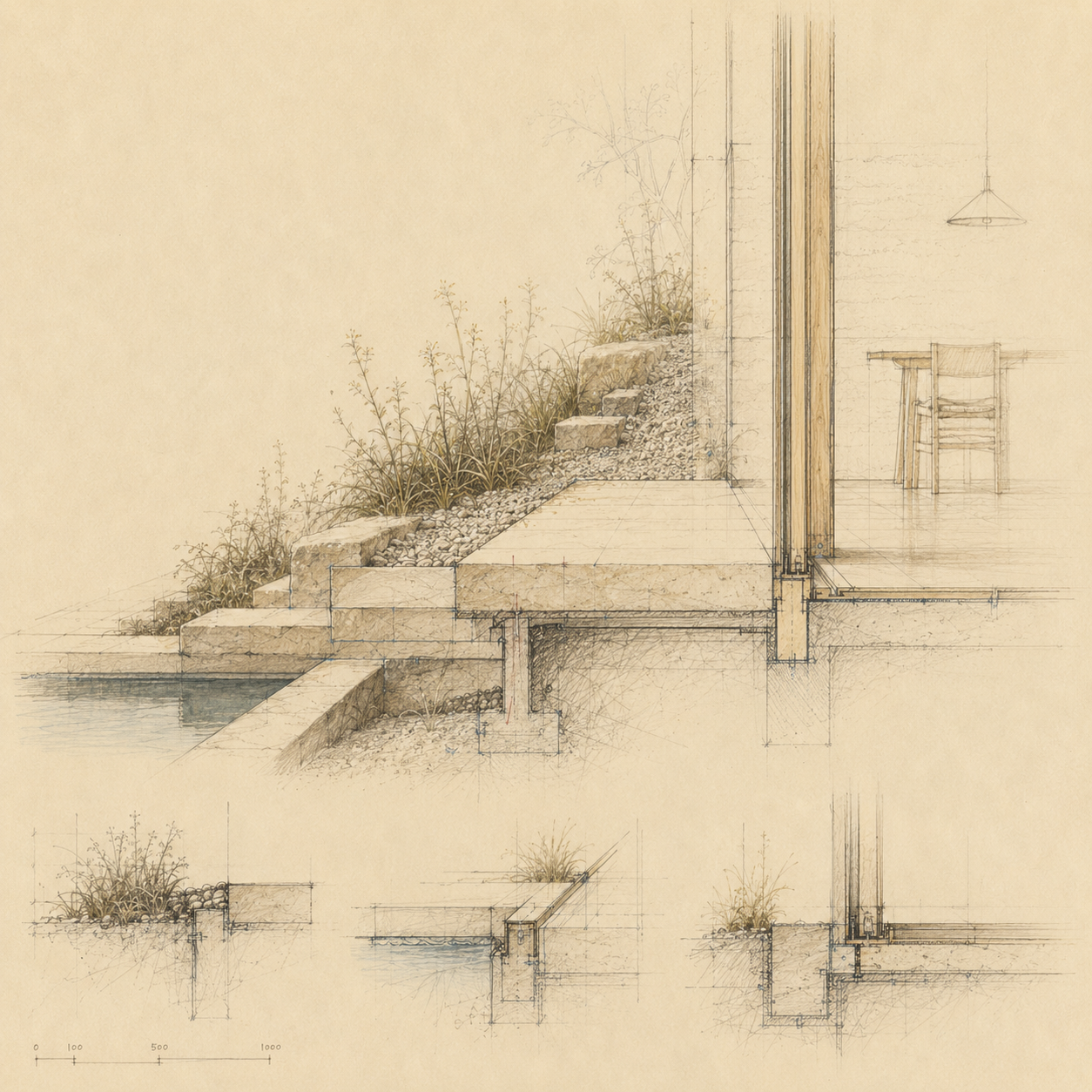
Materially, the project depends on a controlled tension between lightness and mass. The thin roof, bronze framing, subtle polycarbonate elements, and operable glass enclosure give the house a quiet technical clarity, while the large stone blocks and panels ground it into the site. Timber is used not decoratively, but structurally and spatially: as waffle soffit, built-in storage, wall lining, and inhabitable furniture. Outside, clean patios, gravel fields, native planting, and long narrow pools extend the architecture into the slope, creating horizontal lines that pull the eye toward the lake. The result is a house that feels calm, precise, and deeply situated — not polished luxury, but a refined architecture of shelter, craft, light, and landscape.