HOUSE 046
MARFA, TX
2024
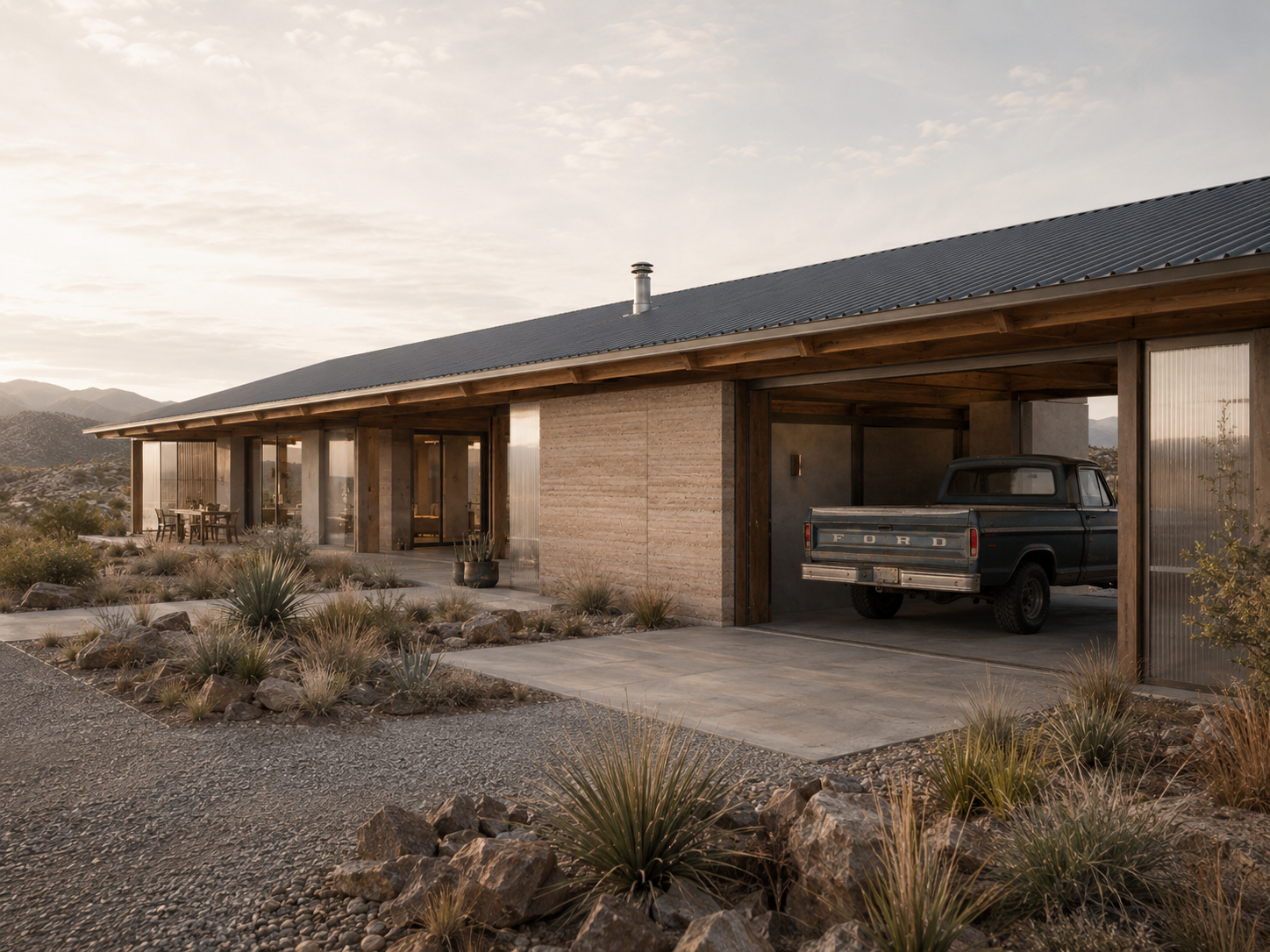
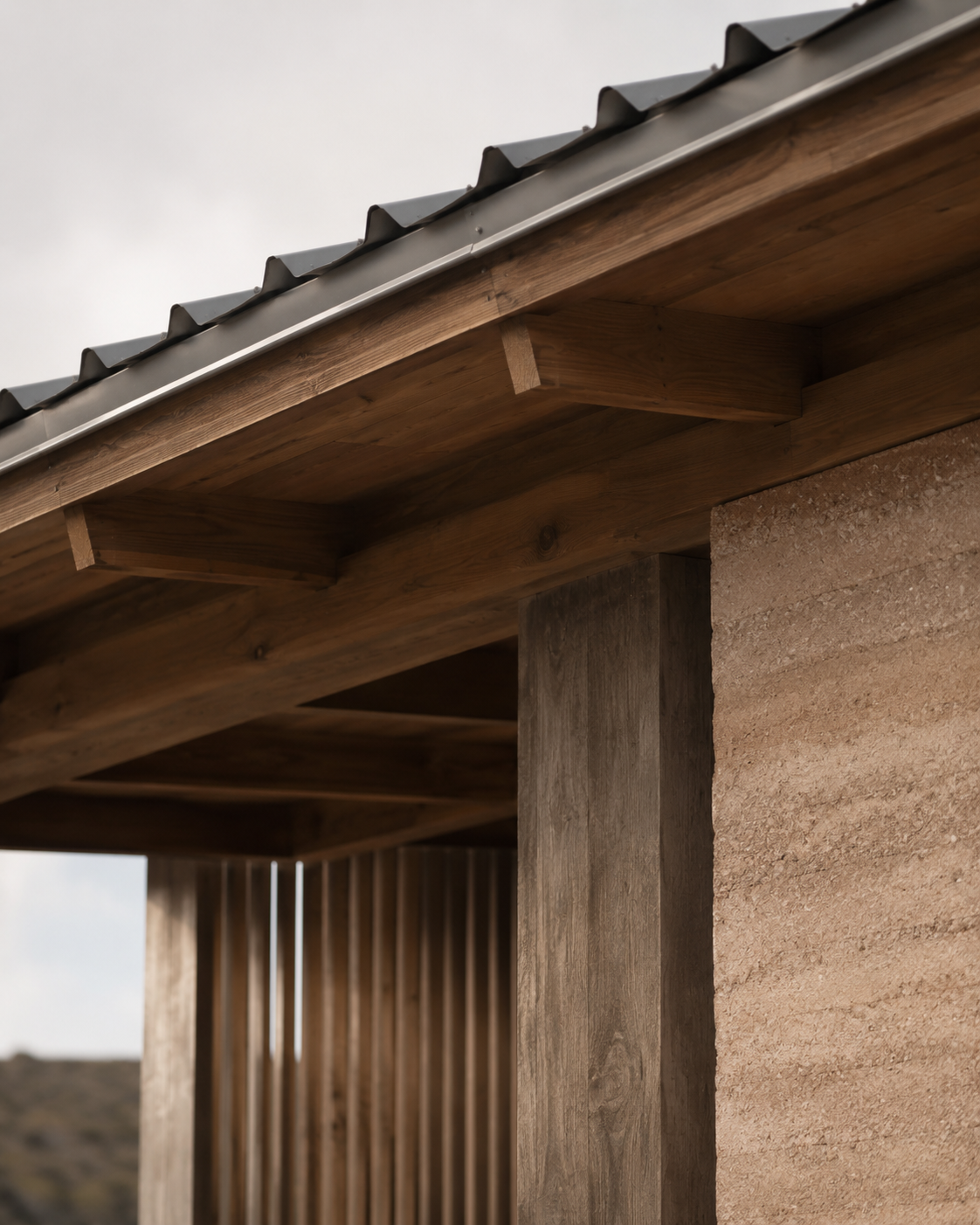
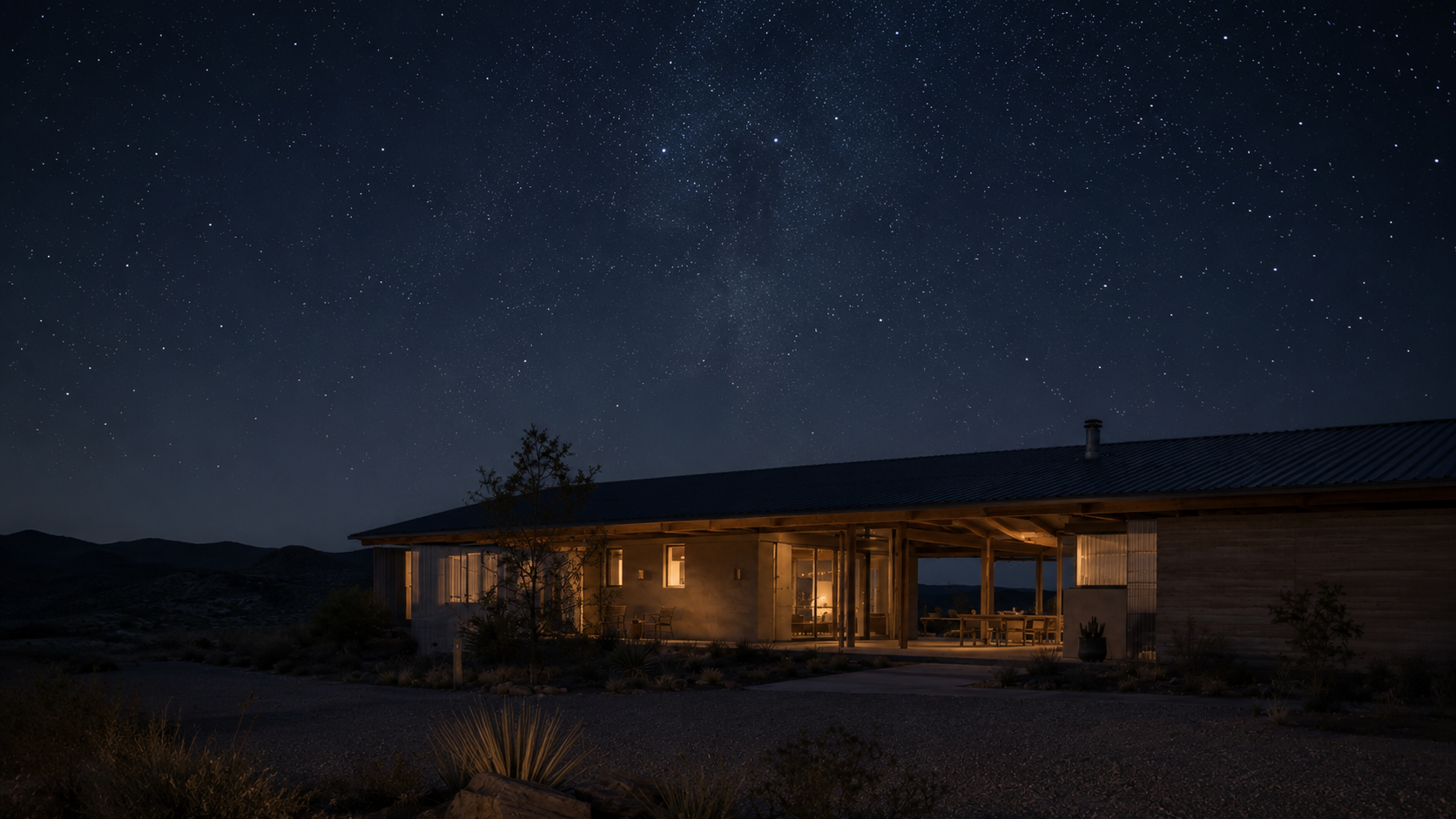
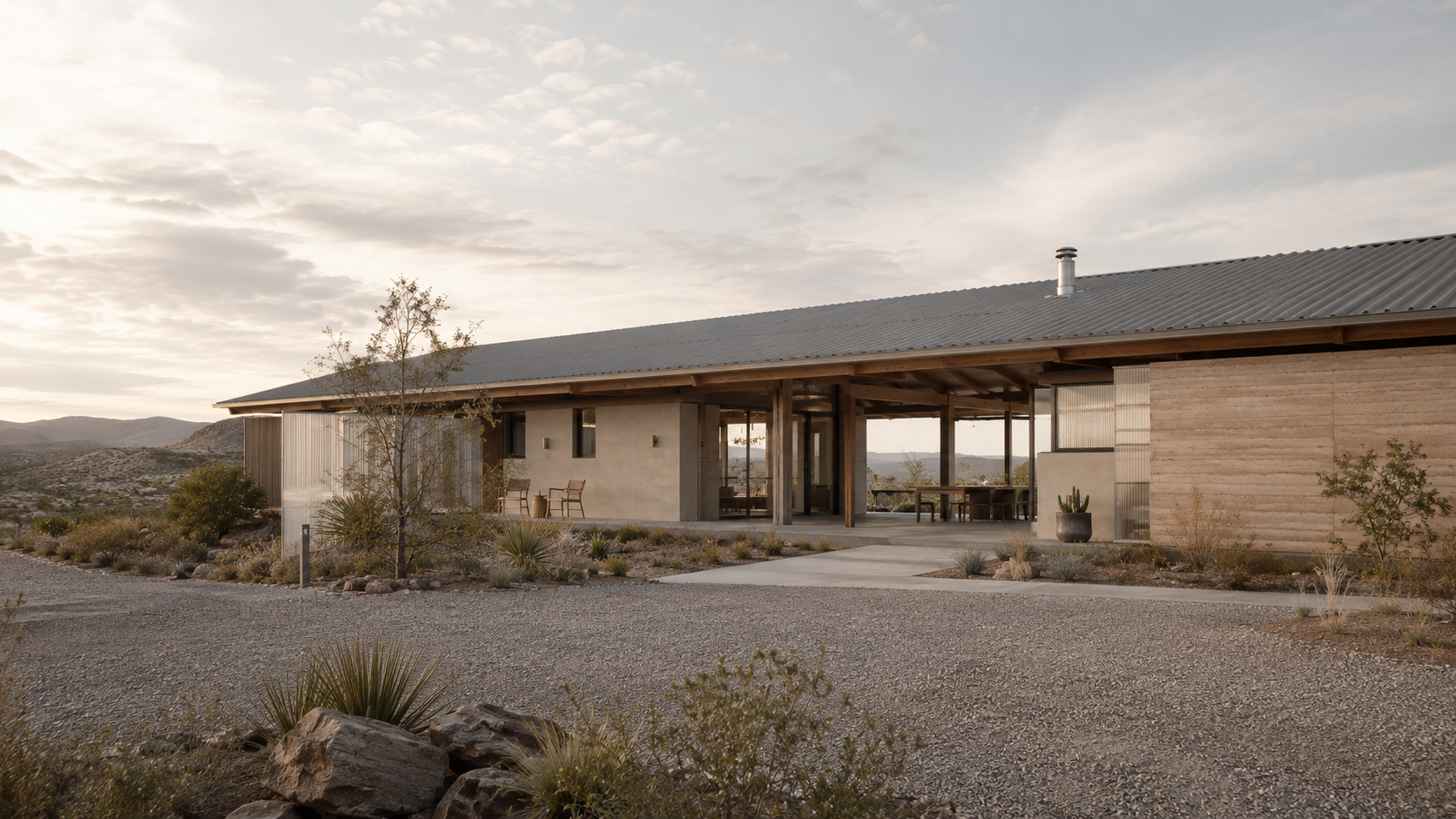
Set within a dry, exposed landscape, the house is conceived as a low off-grid shelter rather than a conventional retreat. One continuous metal roof gathers the project into a single protected field, holding together rooms, porch, garage, service zones, and shaded outdoor space beneath a simple structural order. The building accepts the harshness of the site directly: heat, wind, dust, long periods of sun, cold night air, and limited access to water and infrastructure. Its architecture is deliberately restrained, using shade, mass, orientation, and material depth as the first environmental systems.
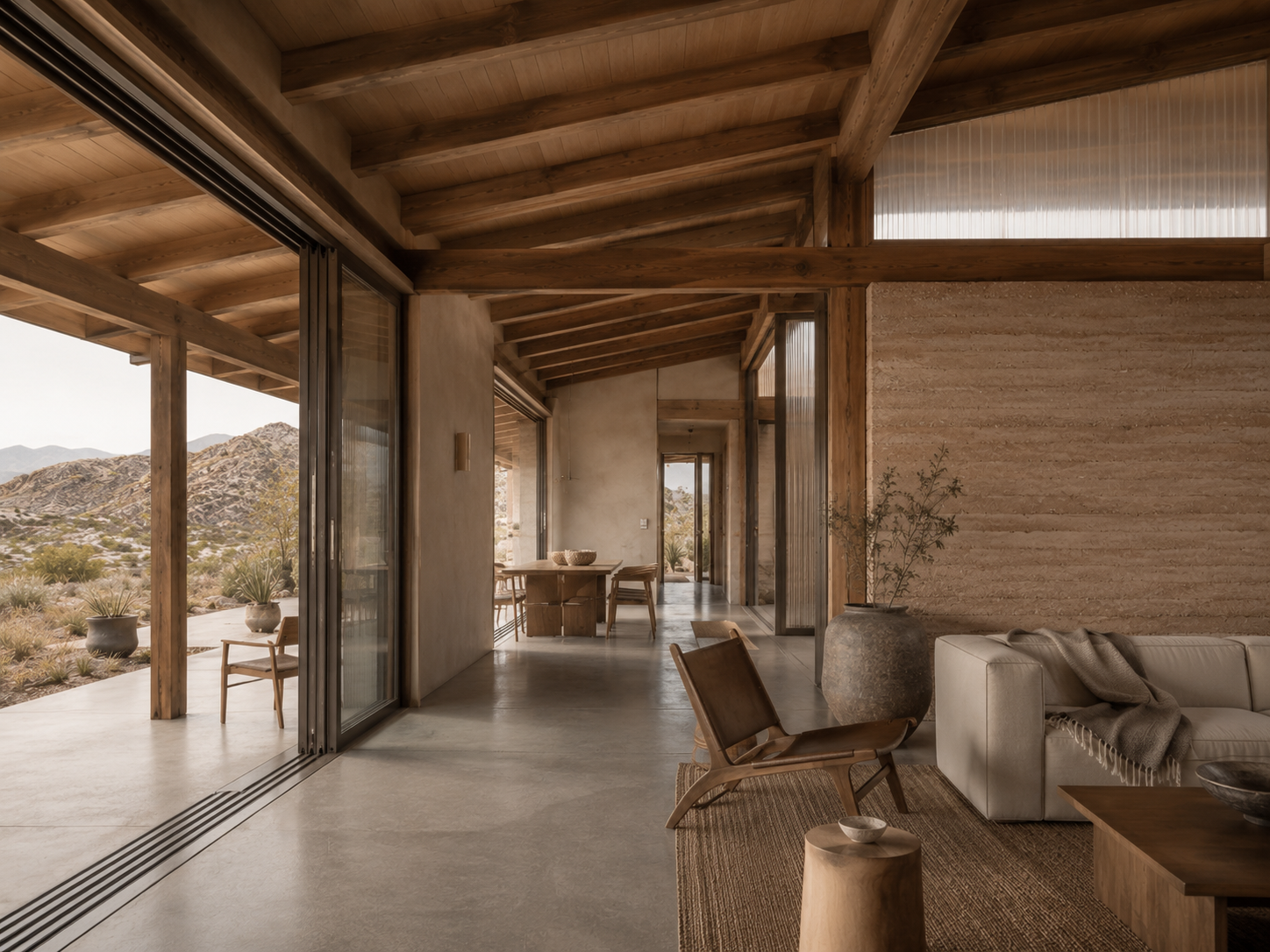
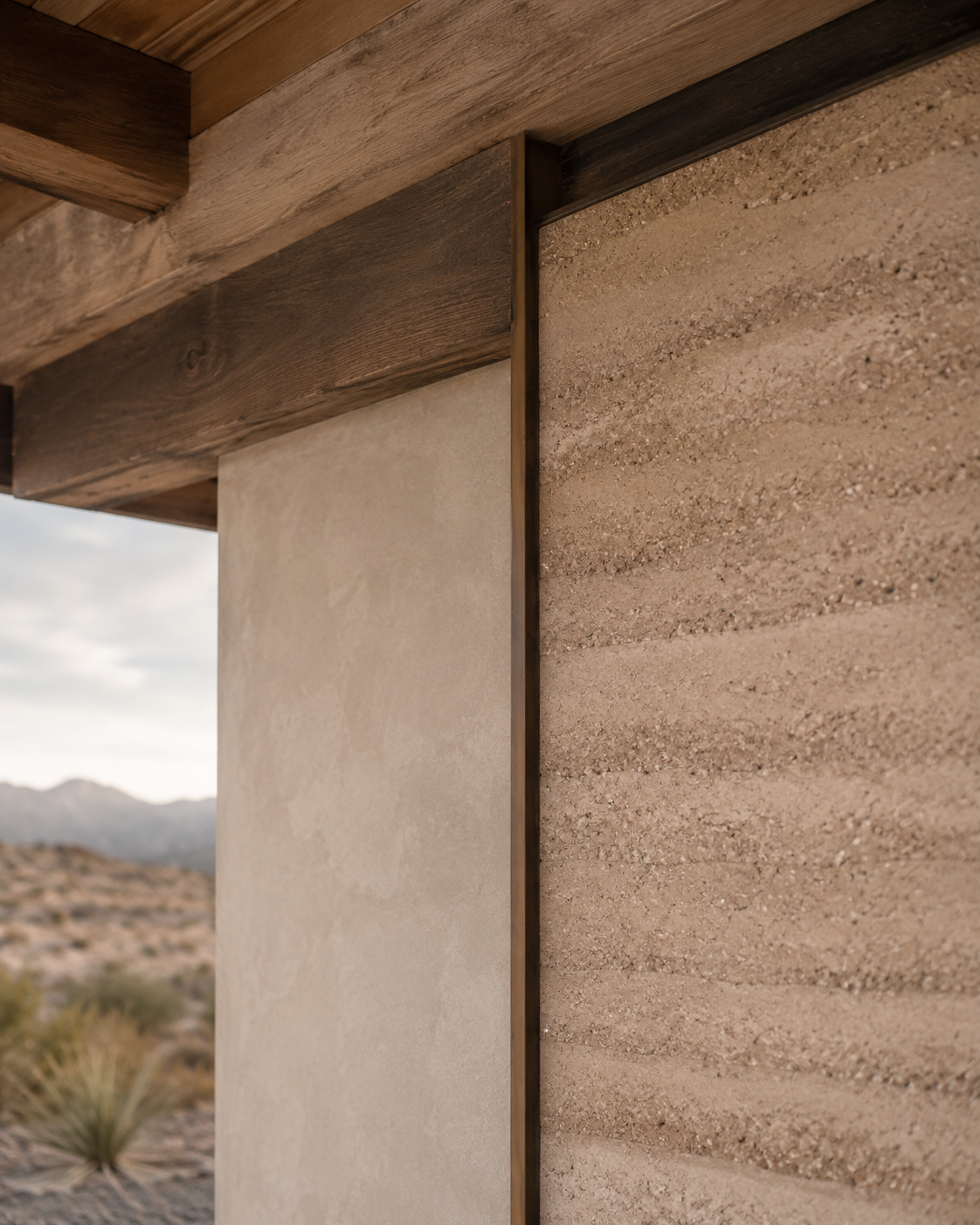
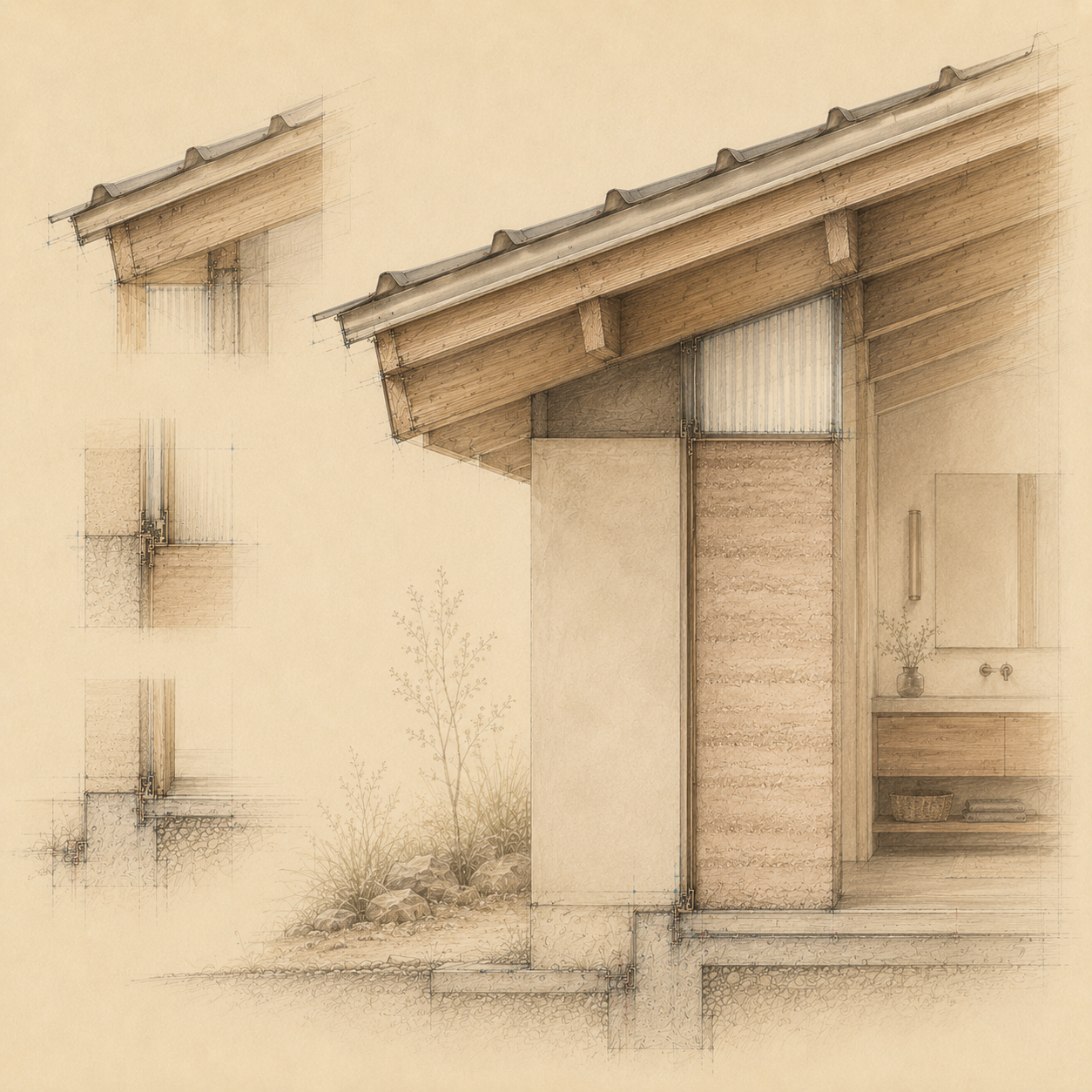
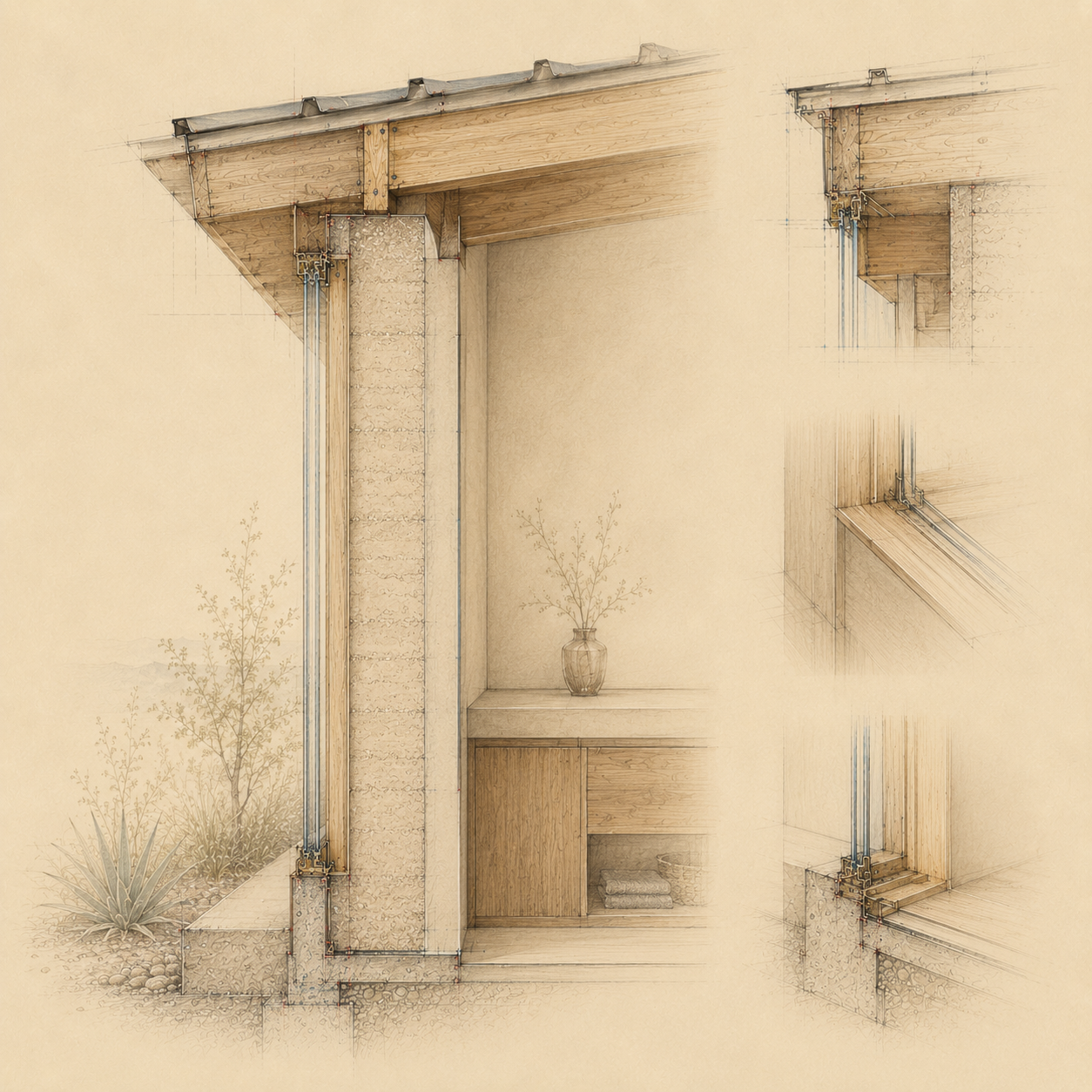
The project relies on an agrarian construction logic: exposed timber structure, galvanized metal roofing, rammed earth or mineral wall mass, concrete floors, translucent polycarbonate inserts, and deep roof overhangs. These elements are not decorative; they are part of the building’s environmental intelligence. The metal roof collects water, protects the timber frame, and creates a broad zone of shade. Polycarbonate clerestories bring in softened light without excessive glare. Heavy walls temper heat and create protected interiors, while operable openings allow cross-ventilation when the weather permits. The garage and covered parking for the old pickup are treated as part of the same inhabited canopy, acknowledging that movement, maintenance, storage, and shelter are central to life on the site.
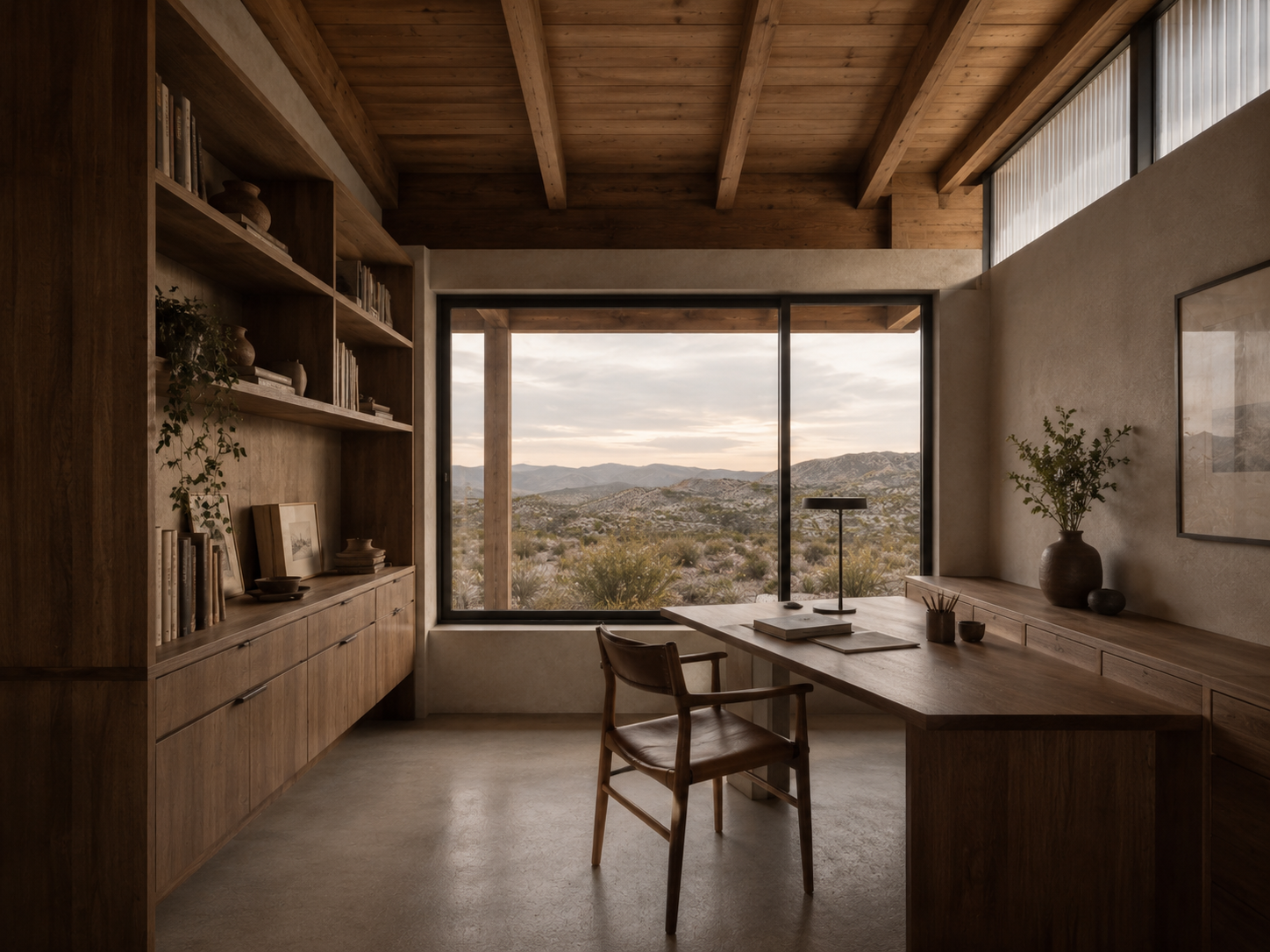
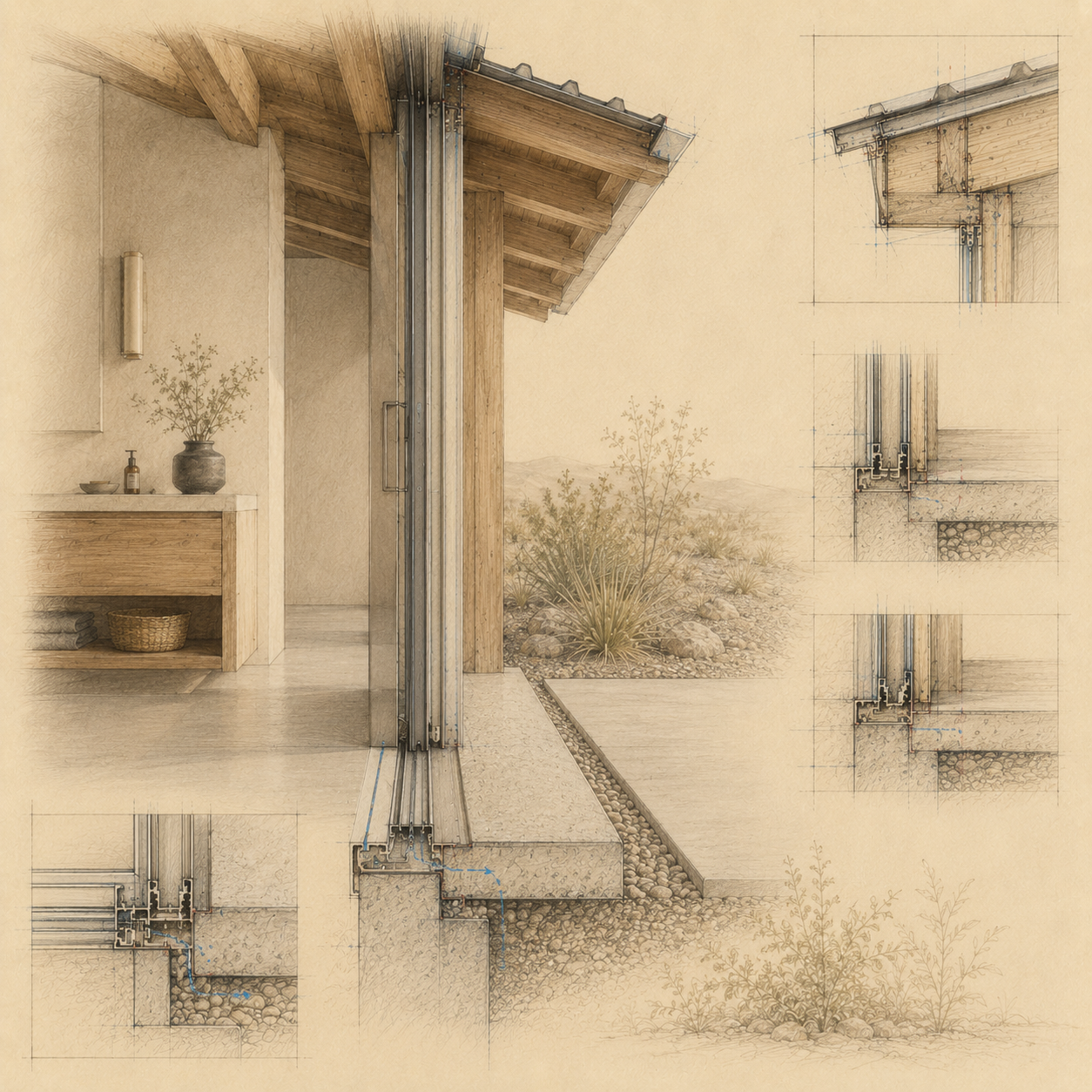
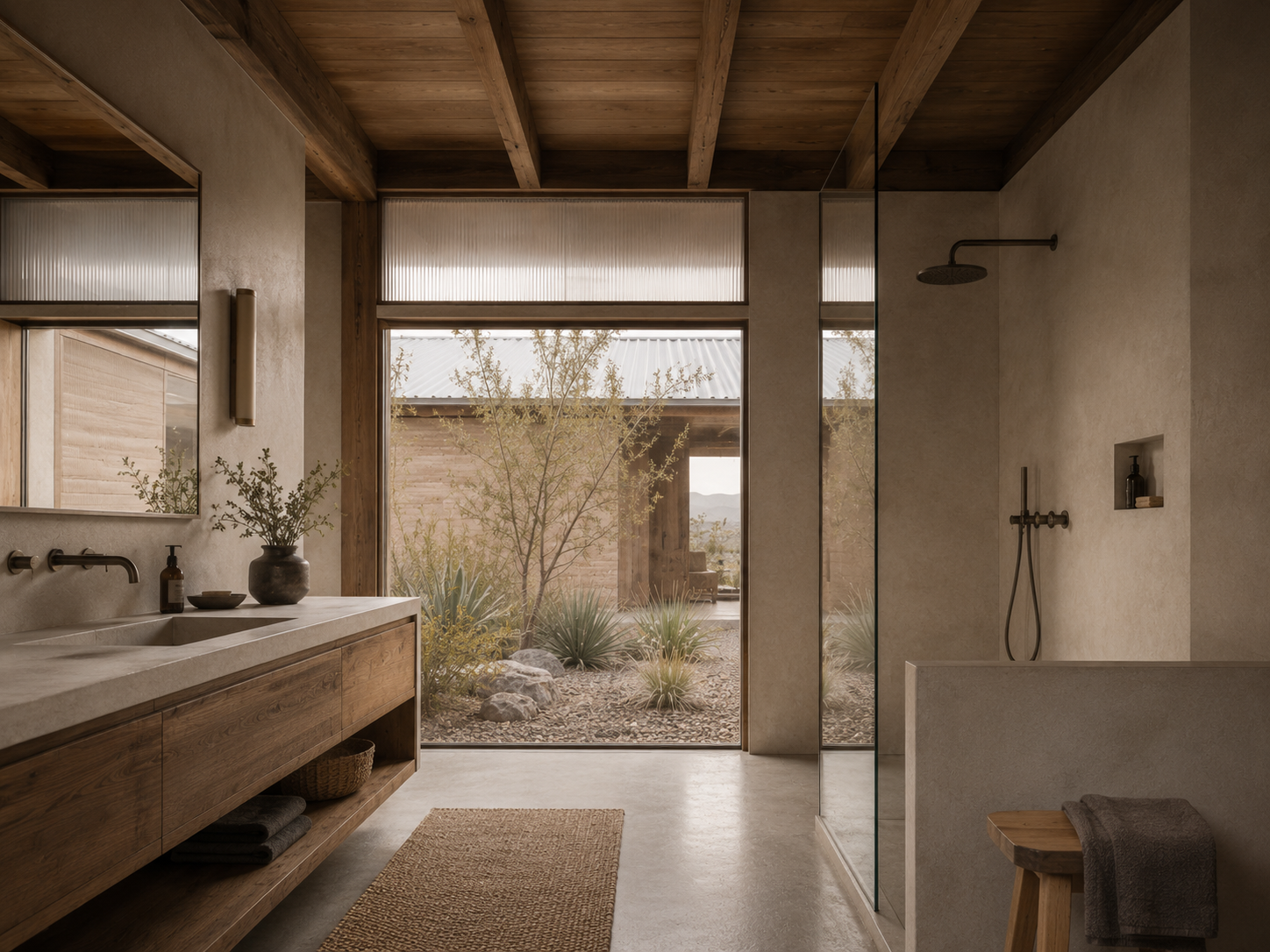
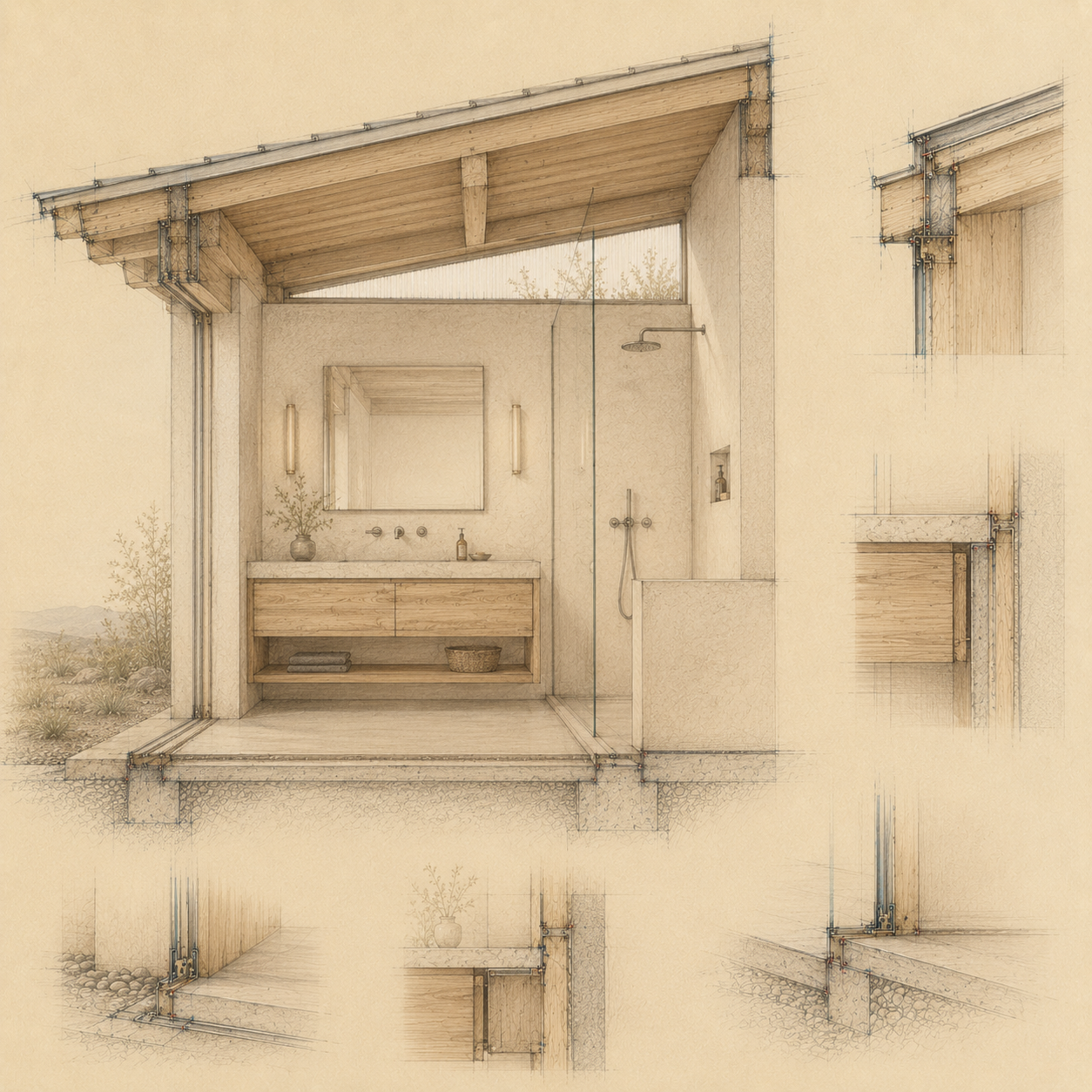
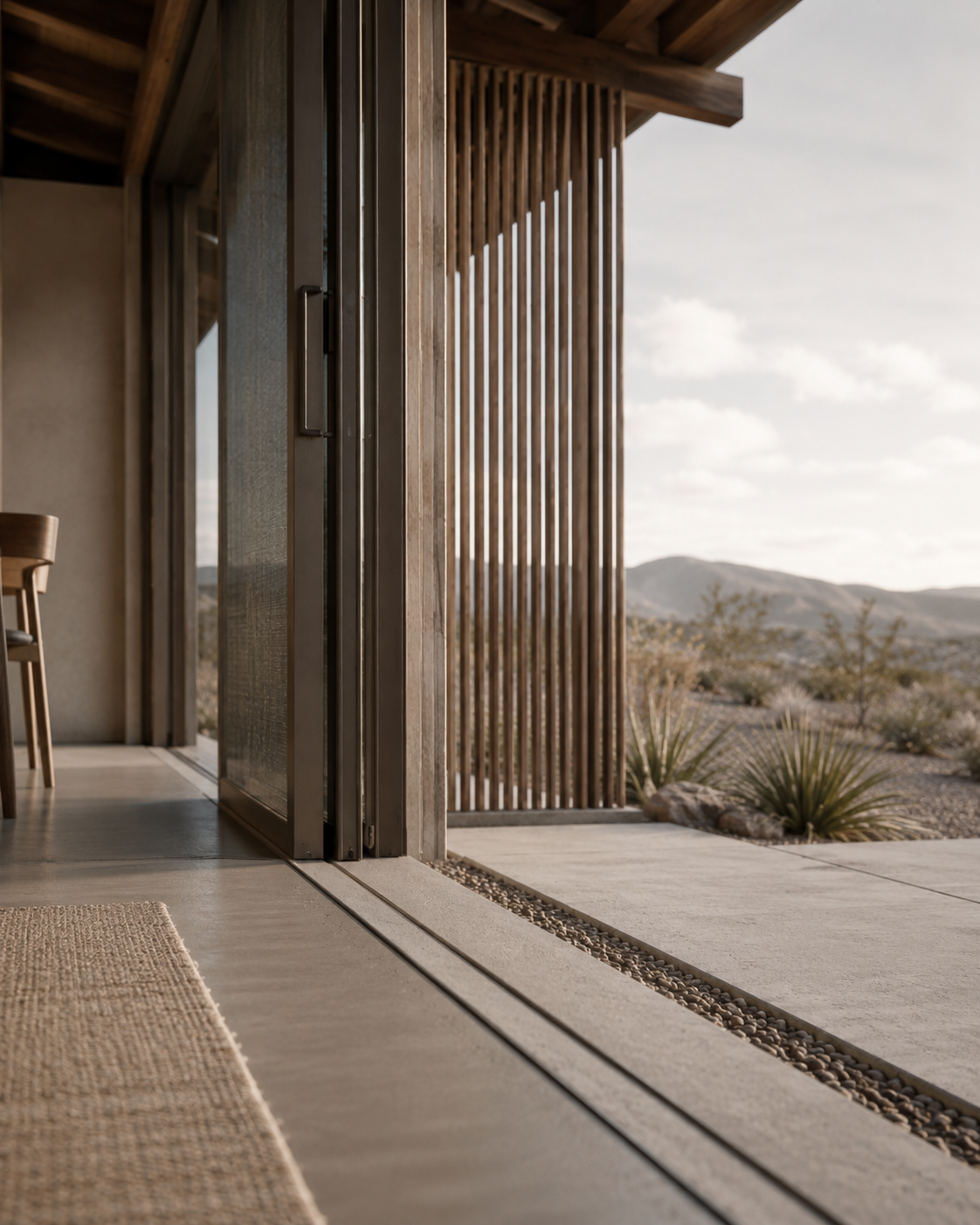
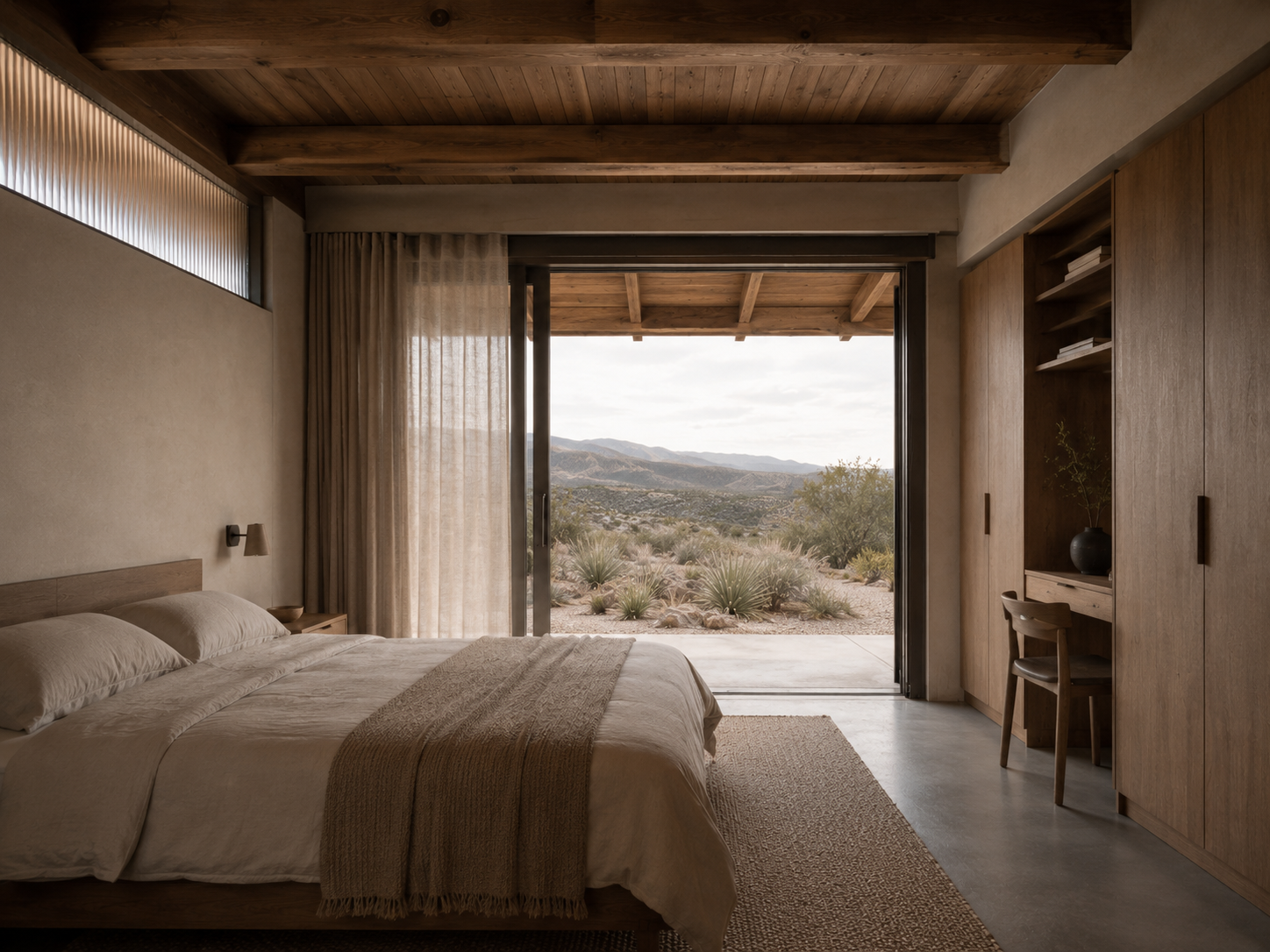
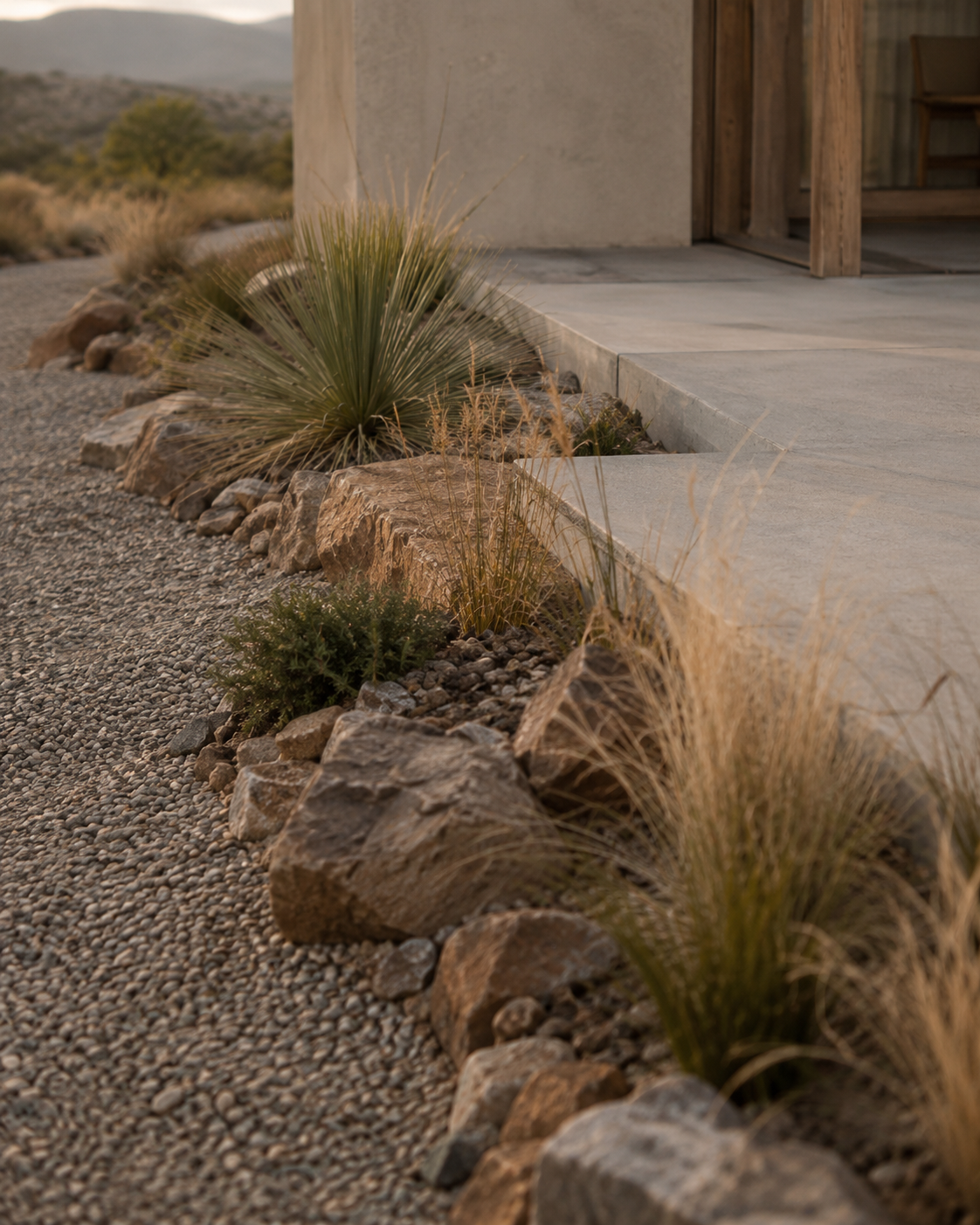
Inside, the house becomes quieter and more precise. Built-in casework, timber linings, compact rooms, and carefully detailed thresholds give the rough outer frame a more intimate domestic scale. The sequence moves from gravel and exposed planting, to shaded porch, to deep openings, to cool interior rooms that hold filtered views back toward the desert. The bathroom, bedroom, and study are treated as protected chambers within the larger roof structure, each shaped by clerestory light, modest fixtures, and direct relationships to the landscape. The project is off-grid not as a technical performance image, but as a way of living with constraint: using fewer systems, accepting exposure, and making the house resilient through its section, its materials, and its daily rituals.